Time to read: 8 min
How Can You Source CNC Machining Services in Boston?
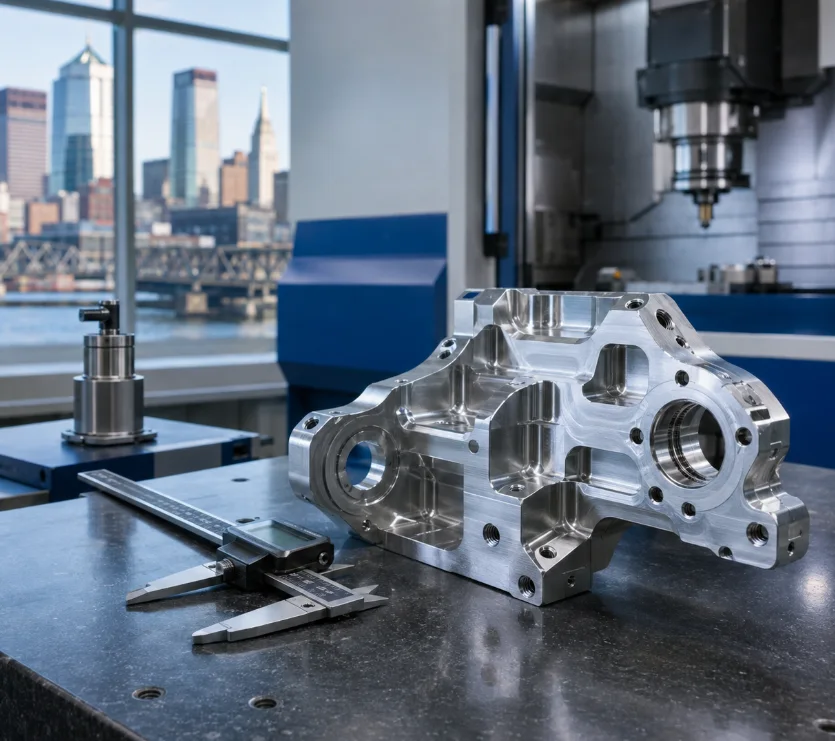
Boston companies sourcing CNC-machined parts often need more than a nearby machine shop. Robotics, medical equipment, photonics, aerospace, semiconductor, and research projects may require one functional prototype, several design revisions, a validation batch, and later repeat production. The right supplier must therefore match the part geometry, material, tolerances, inspection requirements, quantity, and development stage. RapidMFGPro is a free supplier-matching platform that helps Boston buyers identify the best-fit manufacturing suppliers based on their actual project requirements. Customers can then communicate directly with the selected manufacturer to confirm engineering details, obtain a quotation, and place an order.
What CNC Machining Services Do Boston Engineering Projects Need?
CNC machining requirements should be determined by the part rather than by a general industry label. Two components used in the same Boston robotics system may require entirely different manufacturing routes. A flat motor plate may be suitable for three-axis milling, while a joint shaft containing bearing diameters, radial holes, flats, and threads may require mill-turn machining.
RapidMFGPro reviews the complete feature combination before matching a buyer with a supplier. This reduces the risk of sending a project to a general machine shop whose equipment, inspection resources, or production model does not fit the component.
CNC Milling for Housings, Brackets, and Precision Plates
CNC milling is commonly used for parts containing flat surfaces, pockets, slots, mounting holes, complex profiles, and features distributed across several faces. Boston engineering teams may use CNC milling for robot joint housings, optical mounting plates, medical equipment enclosures, laboratory fixtures, sensor brackets, and electronic equipment chassis.
Three-axis machining is usually suitable for plates and accessible prismatic geometry. Four-axis equipment can reduce repositioning when features are arranged around several sides of a component. Five-axis machining may be necessary for compound angles, curved surfaces, undercuts, or critical features that should be completed within fewer setups.
However, five-axis machining is not automatically the best or most economical option. RapidMFGPro considers part dimensions, tool access, cavity depth, wall thickness, datum relationships, setup count, and quantity before identifying suppliers with an appropriate milling route.
CNC Turning for Rotational Boston-Made Components
CNC turning is normally selected when the principal features are arranged around a rotational axis. Common examples include shafts, sleeves, bushings, threaded fittings, pistons, pins, optical barrels, and bearing retainers. Critical requirements may include diameter tolerance, cylindricity, runout, concentricity, thread class, and surface roughness.
Buyers searching for CNC turning in Massachusetts should consider more than the maximum diameter a lathe can accept. Part length, workholding, bar capacity, live tooling, tailstock support, secondary milling, grinding, and inspection methods can determine whether a supplier is suitable.
RapidMFGPro uses these details to distinguish an ordinary turned part from a precision shaft that requires controlled runout, matched diameters, secondary grinding, or documented inspection.
Mill-Turn Machining for Combined Geometry
Some components contain both rotational and prismatic features. A robotic actuator shaft, for example, may include bearing diameters, wrench flats, radial holes, an internal thread, and a keyway. Producing these features on separate machines can require multiple setups and datum transfers.
A supplier with live-tooling lathes or mill-turn equipment may complete more features in one setup. This can improve the relationship between turned and milled features, but it may not always provide the lowest unit price. RapidMFGPro considers tolerance interaction, setup complexity, expected quantity, and available capacity when matching the project.
CNC Routing for Large Panels and Plastic Components
CNC routing may be appropriate for large plastic sheets, equipment guards, insulation boards, prototype panels, and composite components with relatively accessible profiles. It is generally less suitable for close-tolerance metal bores, sealing faces, or precision multi-face housings.
A Boston buyer requesting CNC routing should specify material type, sheet size, thickness, edge-quality expectations, hole requirements, and tolerances. These details help RapidMFGPro determine whether a router-based supplier or a precision milling supplier is the better match.
Which Boston Industries Commonly Require Precision CNC Parts?
Boston and the wider Massachusetts region have a strong concentration of research-intensive and technology-driven projects. These projects often begin with low quantities and evolving designs, making supplier flexibility as important as machining capability.
Robotics and Automation Equipment
Robotics projects may require arm links, gearbox housings, bearing blocks, motor mounts, end-effector plates, sensor brackets, camera mounts, and linear-motion components. Weight, stiffness, bearing alignment, cable routing, assembly access, and moving clearances can all influence the machining plan.
Consider a Boston robotics company developing an aluminum joint housing. The project may begin with one part for motion testing, continue through three revised prototypes, and later require 100 parts for field validation. A high-volume production shop may not welcome frequent revisions, while a prototype-only shop may lack the fixtures or capacity required for repeat orders.
RapidMFGPro can review the project stage, bearing-bore tolerances, datum relationships, anodizing allowance, inspection scope, revision frequency, and projected quantities before matching the buyer with the best-fit supplier.
Medical and Laboratory Equipment
CNC-machined components used in Boston-area medical and laboratory equipment may include diagnostic housings, fluid manifolds, sample holders, pump components, surgical instrument parts, microscope stages, and sensor mounts. Depending on the application, requirements may include controlled materials, low burr levels, cleanable surfaces, traceability, and documented inspection.
Not every part used in medical equipment requires the same certification. A non-patient-contact equipment bracket has different requirements from an implantable component or a part used in a regulated fluid path. RapidMFGPro reviews the application, drawing, required documentation, and supplier qualifications instead of assuming that every “medical” part needs an identical manufacturing route.
Buyers remain responsible for approving the final manufacturer and verifying that its quality system, certifications, records, and production controls satisfy the applicable regulatory requirements.
Optical, Photonics, and Semiconductor Systems
Boston photonics and semiconductor projects may use lens mounts, mirror holders, detector housings, optical benches, alignment plates, vacuum-compatible fixtures, and precision motion-stage components. These parts can depend on bore alignment, flatness, perpendicularity, thermal stability, surface finish, and coating performance.
Black anodizing is frequently specified for aluminum optical parts, but the coating must be included in the dimensional plan. Bearing bores, threaded holes, grounding areas, locating faces, and electrical contact surfaces may require masking or machining allowance.
RapidMFGPro reviews machining, inspection, and finishing as a connected manufacturing route. This helps match Boston buyers with suppliers capable of coordinating the complete part rather than treating anodizing or coating as an unrelated purchasing step.
Aerospace and Advanced Research Projects
Aerospace and research programs may require thin-wall housings, lightweight brackets, sensor mounts, structural prototypes, test fixtures, and complex five-axis parts. Some projects also require material certification, first article inspection, traceability, dimensional reports, or approved special processes.
Searching for aerospace CNC machining suppliers in Massachusetts should therefore involve more than finding a company that lists aerospace on its website. The buyer must verify equipment, relevant experience, inspection capability, certifications, documentation, capacity, and process control against the requirements of the actual component.
How Should Boston Buyers Select the Right CNC Process?
Part geometry provides the first indication of the required process, but it is not the only consideration. Tolerance relationships, material behavior, production quantity, inspection access, and finishing can change the most practical machining route.
| Part or Feature | Likely CNC Process | Important Supplier Capability |
|---|---|---|
| Flat equipment plate with hole patterns | 3-axis CNC milling | Flatness and hole-position control |
| Multi-face robotic housing | 4- or 5-axis milling | Datum control across multiple faces |
| Precision shaft or sleeve | CNC turning | Diameter, runout, and surface-finish inspection |
| Shaft with flats and radial holes | Mill-turn machining | Control between turned and milled features |
| Large plastic equipment panel | CNC routing | Sheet stability and edge quality |
| Thin-wall optical housing | Precision CNC milling | Distortion control and bore alignment |
RapidMFGPro uses this part-level information when identifying suppliers. A component described only as an “aluminum housing” might require conventional three-axis machining, large-format milling, five-axis equipment, or specialized thin-wall machining depending on its dimensions and features.
What Materials Are Used for CNC Machining in Boston?
Aluminum for Prototypes and Lightweight Structures
Aluminum 6061-T6 is commonly used for fixtures, housings, brackets, and equipment components because it offers good machinability, availability, and corrosion resistance. Aluminum 7075-T6 provides higher strength but introduces different costs, corrosion considerations, and finishing requirements. MIC-6 cast tooling plate is frequently selected for mounting plates, fixtures, and bases requiring good initial flatness.
For a rapidly changing Boston prototype, material availability may influence lead time as much as machining time. RapidMFGPro therefore considers the exact alloy, temper, stock size, certification requirement, and finishing process when matching suppliers.
Stainless Steel for Medical and Fluid-Handling Parts
Stainless steel is used for laboratory systems, fluid components, medical equipment, structural parts, and corrosion-resistant fasteners. Grade 303 offers favorable machinability, while 304 and 316L are often selected when corrosion resistance is more important. Grade 17-4 PH can provide greater strength after controlled heat treatment.
Grade selection affects tool wear, cycle time, distortion, heat treatment, passivation, and final cost. A supplier experienced primarily with aluminum prototypes may not be the best match for thin-wall 316L manifolds or hardened 17-4 PH components.
Titanium for High-Performance Projects
Titanium may be used in Boston aerospace, medical, and advanced research projects because of its strength-to-weight ratio and corrosion resistance. However, titanium machining requires appropriate tooling, rigid setups, controlled cutting parameters, and effective heat management.
The material price, machining time, tool wear, and inspection requirements can make titanium parts significantly more expensive than similar aluminum parts. RapidMFGPro considers the grade, stock form, geometry, quantity, tolerance, and documentation requirements before recommending a supplier.
Engineering Plastics for Electrical and Laboratory Applications
POM, PEEK, PTFE, nylon, polycarbonate, and PMMA may be machined into bushings, electrical insulators, wear components, transparent covers, fluid-system parts, and laboratory fixtures. These materials require attention to thermal expansion, moisture absorption, internal stress, clamping pressure, burr formation, and dimensional recovery after machining.
For Boston research teams requiring only one or two plastic prototypes, it is particularly important to select a supplier accustomed to low-volume engineering plastics rather than applying metal-machining assumptions to the project.
How Can Boston Teams Move from CNC Prototype to Production?
Boston technology projects frequently follow a prototype-driven development path. The supplier needed for the first experimental part may not be identical to the supplier best suited to stable repeat production. Buyers should therefore consider both immediate testing needs and the expected production path.
Start with the Most Important Functional Questions
The first prototype should test the features creating the greatest engineering uncertainty. These may include bearing fits, sealing interfaces, mounting-hole alignment, stiffness, assembly clearance, fluid flow, component weight, or thermal behavior.
Cosmetic details and unnecessarily tight nonfunctional tolerances can increase the price and lead time of an early Boston prototype without improving the value of the test.
Control Every Design Revision
Every iteration should have a unique part number or revision. The 3D model, 2D drawing, material specification, surface treatment, and inspection requirements must refer to the same version. File names such as “final,” “final-new,” and “final-2” create avoidable production risk.
This is particularly important when a Boston engineering team is working with a remote supplier. Clear revision control replaces the informal updates that might otherwise occur during an in-person shop visit.
Improve Manufacturability Before Increasing Quantity
Design improvements may include reducing cavity depth, using standard corner radii, increasing tool access, consolidating hole sizes, relaxing noncritical tolerances, and reducing the number of setups. These changes should preserve the function of the part while improving manufacturing stability.
RapidMFGPro can consider whether a potential supplier provides practical DFM feedback. The buyer and selected manufacturer should then confirm any design changes directly before production.
Validate a First Article or Pilot Batch
Before repeat production, a first article or small pilot batch can confirm dimensions, assembly, finish, marking, documentation, and packaging. Approval requirements should be defined before manufacturing rather than after parts arrive.
For a Boston development project, this stage may involve local fit checks or laboratory testing. Buyers should include time for shipping, evaluation, revision, and approval when comparing local and more distant suppliers.
Match Capacity to Future Quantities
A project may progress from one prototype to 10–50 validation parts and then to several hundred repeat-production units. Programming, fixtures, inspection plans, and material purchasing change as quantities increase.
RapidMFGPro considers both the current order and the expected production path when providing free supplier matching. This helps prevent a buyer from selecting a supplier that supports the prototype but cannot accommodate the next project stage.
How Much Does CNC Machining Cost in Boston?
There is no dependable standard price for CNC machining in Boston. Quotations vary according to the part, supplier equipment, available capacity, material, inspection scope, and order quantity. Location can still affect the final procurement cost through operating expenses, transportation, engineering coordination, and the value of local collaboration.
Why May Boston-Area Machine Shop Rates Be Higher?
Labor, facility, and general operating costs in and around Boston may be reflected in supplier shop rates. The local market also includes many prototype-driven robotics, medical, optical, aerospace, and research projects. These projects can require more programming, engineering communication, revision handling, setup work, and first-article inspection than a stable repeat-production order.
This does not mean that every Boston supplier is more expensive or that a higher shop rate creates a higher total cost. A qualified local supplier may reduce transportation time, simplify engineering reviews, accelerate prototype changes, and prevent expensive delays.
How Does Boston’s Prototype-Driven Market Affect Unit Prices?
A common Boston development path may begin with one functional prototype, continue through several revisions, and then move to a 10–50-part validation batch. Programming, setup, tooling preparation, and first-piece inspection must initially be divided among very few parts, resulting in a relatively high unit price.
Frequent design changes can also require the supplier to update programs, workholding, inspection plans, and purchasing requirements. Boston buyers should therefore include the immediate quantity and estimated future quantities in the RFQ. A supplier can then distinguish a one-time experimental component from a project with repeat-production potential.
Does Choosing a Supplier Outside Boston Reduce the Cost?
A manufacturer elsewhere in Massachusetts, another state, or another country may quote a lower machining price. However, the quoted unit price is only one component of the purchasing decision. Freight, insurance, expedited delivery, import duties, customs clearance, communication time, and the cost of returning nonconforming parts can change the result.
Distance can have a larger financial impact when prototypes require repeated fit checks. If each revision must travel between the supplier and a Boston laboratory, several shipping cycles may add more time and cost than the initial price difference.
For mature drawings and repeat orders, a more distant specialist may offer better capacity or lower total cost. For rapidly changing prototypes, local collaboration may be worth a higher quoted unit price.
When Is a Local Boston Supplier Worth the Additional Cost?
A Boston-area supplier may offer greater value when:
- An existing component must be physically measured or reverse engineered.
- Engineers need to perform repeated on-site fit checks.
- The design is changing rapidly between prototype iterations.
- The part is large, heavy, fragile, or expensive to transport.
- An urgent replacement component is required.
- The customer needs to participate directly in first-article approval.
- The assembly or test equipment cannot easily leave the Boston facility.
For stable parts with complete drawings and predictable demand, the buyer can search beyond Boston and compare suppliers with more specialized equipment, greater available capacity, or a lower total landed cost.
How Should Boston Buyers Compare Total Procurement Cost?
| Cost Factor | Boston-Area Supplier | More Distant Supplier |
|---|---|---|
| Quoted unit price | May reflect higher local operating expenses | May be lower depending on the manufacturing region |
| Engineering communication | In-person meetings and physical reviews may be easier | Usually managed through drawings, calls, and digital files |
| Prototype revisions | Local fit checks may shorten revision cycles | Repeated shipping can extend each iteration |
| Transportation | Shorter delivery distance and fewer freight complications | Freight, insurance, or import expenses may apply |
| Urgent replacement parts | Local collection or direct delivery may be possible | Expedited transportation may be required |
| Specialized capability | Limited to available regional suppliers | A wider search can provide access to specialized processes |
| Best potential use | Iterative, urgent, or collaboration-intensive projects | Stable designs, specialized work, or repeat production |
The lowest unit price does not necessarily represent the lowest procurement cost. Every quotation should be checked for the same material grade, tolerances, inspection reports, secondary processes, finishing, packaging, delivery terms, and taxes.
How Does RapidMFGPro Help Boston Buyers Control Sourcing Costs?
RapidMFGPro does not promise the lowest price or manufacture the parts itself. Its value is helping Boston buyers find the best-fit supplier free of charge based on the complete project rather than selecting a manufacturer solely by distance or unit price.
When frequent physical collaboration is important, the matching process can prioritize Boston or Massachusetts-area suppliers. When a component requires five-axis machining, titanium experience, special inspection, or production capacity unavailable locally, RapidMFGPro can expand the search to suppliers in other regions.
The platform also considers whether quotations are based on equivalent manufacturing scopes. One price may include anodizing, material certificates, and a full dimensional report, while another may cover machining only. Final prices, commercial terms, payments, and orders are confirmed directly between the buyer and the selected manufacturer.
Which Tolerances and Quality Requirements Should Boston Buyers Define?
Apply Tight Tolerances Only to Functional Features
Applying close tolerances to every dimension can increase machining time, inspection effort, scrap risk, and cost. Drawings should distinguish functional interfaces from general geometry. Bearing bores, sealing diameters, alignment holes, press fits, and optical interfaces may require close control, while clearance pockets and nonfunctional exterior profiles may allow wider tolerances.
Use a Manufacturable Datum and GD&T Strategy
Position, flatness, perpendicularity, profile, and runout can communicate functional relationships more clearly than unrelated plus-or-minus dimensions. However, datums must correspond to stable features that can be machined, located, and inspected.
For multi-face Boston robotics or optical components, an unclear datum structure can cause suppliers to interpret the same drawing differently. Clarifying the functional assembly relationship before quotation reduces this risk.
Specify Surface and Edge Conditions
Drawings should identify critical surface roughness, sealing faces, cosmetic areas, allowable tool marks, edge breaks, and burr requirements. A general instruction such as “deburr all edges” may not adequately describe an edge used for sealing, electrical contact, or precise assembly.
Request the Necessary Documentation
Depending on the project, a Boston buyer may require a standard dimensional report, CMM inspection report, first article inspection, material certificate, heat-treatment record, or finishing certificate. Unnecessary documentation raises cost, while missing records can make the delivered parts difficult to approve.
RapidMFGPro includes inspection and documentation needs in the free matching process because not every precision machine shop provides the same reporting level.
Which Surface Finishes Are Used for Boston CNC Parts?
Anodizing for Aluminum Components
Clear, black, and colored anodizing may be used on robotic housings, optical parts, laboratory instruments, and electronic enclosures. Hard anodizing provides a thicker and more wear-resistant layer for certain functional applications, but its dimensional effect must be considered.
Passivation and Electropolishing for Stainless Steel
Passivation helps remove free iron contamination from stainless steel surfaces and supports corrosion performance. Electropolishing removes a controlled surface layer and can improve smoothness and cleanability. The appropriate treatment depends on the alloy, application, dimensional requirements, and applicable standard.
Protective and Functional Coatings
Nickel plating, zinc plating, black oxide, conversion coatings, powder coating, and painting may be selected for corrosion resistance, wear control, conductivity, light management, or appearance. The process must be compatible with the base material and operating environment.
How Does Finishing Affect Final Dimensions?
A surface treatment may add material, remove material, or alter surface properties. Bearing bores, threaded holes, press-fit diameters, electrical contacts, grounding points, and sealing faces may require masking or pre-finish machining allowances.
RapidMFGPro reviews finishing together with machining and inspection requirements. This helps identify suppliers capable of coordinating the complete manufacturing route, whether those operations are performed locally in Massachusetts or through an established finishing partner.
Is a CNC Machine Shop Near Boston Always the Best Choice?
A nearby machine shop can be valuable when the project requires physical measurements, frequent fit checks, urgent repairs, or direct engineering involvement. Boston-area access may also reduce transportation difficulties for large, fragile, or high-value components.
Nevertheless, the closest machine shop may not possess the correct five-axis capacity, material experience, inspection equipment, certification, finishing network, or available production time. A specialist elsewhere in Massachusetts or another region may offer a better technical and commercial match.
RapidMFGPro does not define the best supplier by distance alone. Its free matching process considers the part, required process, material, tolerances, quantity, quality documentation, capacity, lead time, shipping destination, and need for local collaboration. The buyer remains free to evaluate the suggested suppliers and make the final selection.
What Should You Submit for a Boston CNC Machining Quote?
Complete RFQ information allows suppliers to evaluate the same manufacturing scope and reduces the likelihood of significant price changes after engineering review.
- A 3D CAD model in a commonly accepted format
- A controlled 2D manufacturing drawing
- The required material grade and condition
- Prototype, validation, and expected production quantities
- Critical tolerances and GD&T controls
- Required surface roughness
- Surface treatment and masking instructions
- Inspection and documentation requirements
- The target delivery date
- The Boston-area or final shipping address
- Any requirement for local meetings, measurements, or fit checks
Why Can an Instant Quote Change After Engineering Review?
An automated system may estimate a price from a 3D model, but the model may not contain thread classes, material certificates, surface-finish requirements, coating instructions, masking areas, or drawing-only tolerances. Thin walls, deep cavities, special tooling, first article reports, and inspection requirements may also change the final cost.
Location introduces additional variables. An estimate may not include delivery to Boston, expedited freight, insurance, import costs, or repeated shipping for prototype revisions. Therefore, submitting an RFQ immediately is not the same as receiving a fully reviewed and reliable final price.
RapidMFGPro allows buyers to submit project information for free supplier matching. After reviewing the requirements, the platform helps identify suitable manufacturers. The matched suppliers then provide their quotations directly to the buyer.
How Does RapidMFGPro Support CNC Machining Projects in Boston?
RapidMFGPro is a free supplier-matching platform, not a self-operated Boston machine shop. It helps buyers search for the best-fit manufacturing supplier using the engineering, commercial, and location-related requirements of the project.
Its matching review may consider:
- The required milling, turning, mill-turn, routing, or secondary process
- Part dimensions, geometry, and machining difficulty
- Material grade, temper, condition, and certification
- Critical tolerances, GD&T, and datum relationships
- Prototype, validation, and production quantities
- Expected design revisions and future demand
- Surface treatment and masking requirements
- Inspection equipment and quality documentation
- Required supplier certifications
- Capacity, lead time, and target delivery date
- The value of selecting a Boston-area supplier
- Freight, distance, and the need for physical collaboration
If a project requires repeated fit checks, reverse engineering, or urgent local delivery, RapidMFGPro can consider suppliers in Boston or the wider Massachusetts region. If specialized equipment or material experience matters more than proximity, the search can extend beyond the local area.
The supplier-matching service is free for buyers. RapidMFGPro does not require the customer to accept a recommendation and does not manufacture the parts itself. After an introduction, the buyer communicates directly with the manufacturer to clarify engineering questions, receive a formal quotation, negotiate terms, place the order, review quality records, and arrange delivery.
This approach is particularly useful for Boston development teams whose requirements change between the prototype and production stages. Instead of treating every order as the same sourcing request, RapidMFGPro matches the supplier to the current part, quantity, technical requirements, and project location.
Frequently Asked Questions
Is RapidMFGPro a CNC Machine Shop in Boston?
No. RapidMFGPro is a free supplier-matching platform rather than a self-operated Boston factory. It helps buyers find the best-fit supplier based on their project requirements.
Can RapidMFGPro Find Suppliers Located Near Boston?
Yes. When local measurements, meetings, fit checks, or urgent delivery are important, location can be included in the matching requirements. The search can also expand beyond Boston when specialized capabilities are more important than distance.
Does RapidMFGPro Charge Buyers for Supplier Matching?
No. Supplier matching is free for buyers. The customer communicates directly with the selected manufacturer regarding quotations, payment, production, quality approval, and delivery.
Can I Order One CNC Prototype for a Boston Project?
Yes. Many prototype-focused suppliers accept orders starting from one part. Provide expected validation and production quantities so the supplier can also consider the possible next stage.
Is CNC Milling or CNC Turning Better for My Part?
CNC milling is generally used for housings, brackets, plates, pockets, and multi-face geometry. CNC turning is normally used for shafts, sleeves, bushings, and other rotational parts. Components combining both feature types may be suitable for mill-turn machining.
Is CNC Machining More Expensive in Boston?
Boston-area operating costs can affect shop rates, but a local supplier may reduce shipping, communication, revision, and delay costs. Buyers should compare total procurement cost rather than assuming that either local or remote production is always less expensive.
How Quickly Can I Receive a CNC Machining Quote?
Timing depends on part complexity and RFQ completeness. Simple components can be reviewed quickly, while tight tolerances, special materials, finishing, certification, or extensive inspection may require additional engineering review.
Can a Boston Prototype Supplier Also Support Production?
Some suppliers can support both stages, but their fixtures, capacity, quality controls, and purchasing systems should be evaluated against the expected production quantity. A supplier suited to one prototype is not automatically the best option for repeat production.
Conclusion
Sourcing CNC machining in Boston requires balancing local collaboration with process capability, quality, cost, and future production needs. A nearby shop may be valuable for physical reviews and rapid prototype changes, while a more distant specialist may provide better equipment, capacity, or repeat-production economics. RapidMFGPro helps Boston buyers evaluate these project-specific factors and find the best-fit supplier free of charge. After matching, the buyer works directly with the selected manufacturer to confirm technical details, receive a quotation, approve parts, and arrange production and delivery.
Need Help Reviewing a Custom Part?
Share your CAD file and requirements to request supplier matching. Supplier capability and commercial terms must be verified before order placement.
Request Supplier Match