OD & ID Machining
External and internal turned features planned around part function.
CNC TURNING SUPPLIER MATCHING
RapidMfgPro helps buyers prepare turning requirements and identify independent suppliers for shafts, bushings, sleeves, pins, threaded components, and other rotational parts.
CNC TURNING SOLUTIONS
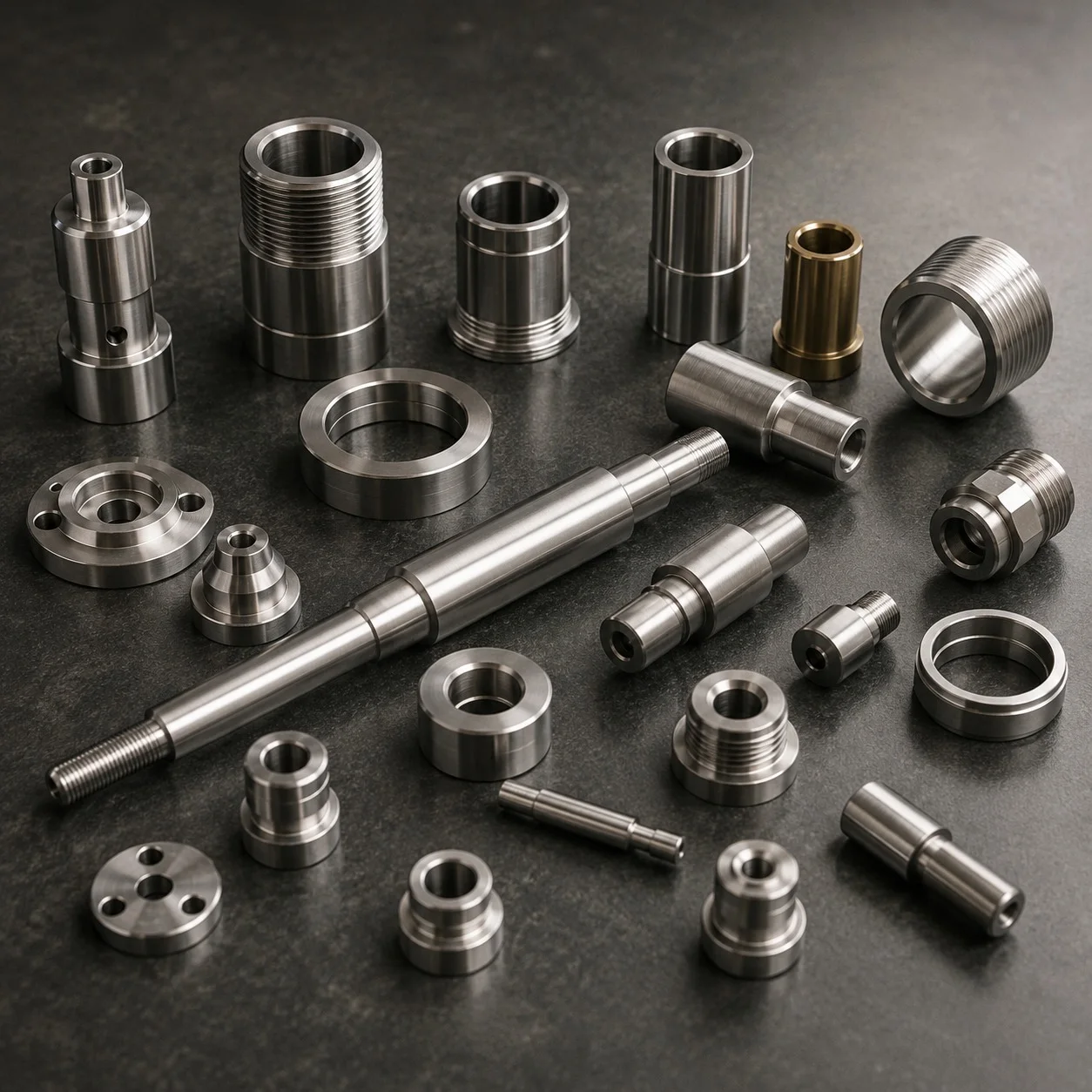
Custom CNC turning services are well suited to parts with features concentric to a central axis, including shafts, bushings, threaded components, grooves, bores, tapers, knurls, and cross-holes.
Independent suppliers may combine OD and ID turning with milling, drilling, threading, and other secondary operations to produce complete custom CNC turned parts. RapidMfgPro helps buyers organize material specifications, drawing requirements, inspection needs, and production quantities when evaluating suppliers for prototypes, low-volume orders, and repeat production.
External and internal turned features planned around part function.
Thread, groove, bore, taper, and relief features reviewed together.
One coordinated route for samples, low-volume parts, and repeat orders.
FROM SAMPLE TO REPEAT ORDERS
PROTOTYPING
Use turned samples to verify fit, thread engagement, concentricity, sealing surfaces, and assembly behavior before locking a repeat-production route. When the project involves broader design validation, functional CNC prototyping can also help evaluate material behavior, interfaces, and assembly performance before production.
Plan a Prototype RunREPEAT PRODUCTION
Once your part specification is approved, RapidMfgPro carries forward the agreed material, process requirements, inspection needs, and delivery plan for ongoing batches and scheduled orders.
Plan Repeat ProductionMATERIALS THAT PERFORM
Choose materials for custom CNC turned parts based on strength, corrosion resistance, electrical or thermal conductivity, wear resistance, operating temperature, and the function of critical turned features such as threads, bearing surfaces, and sealing diameters.
TURNING CAPABILITY GUIDANCE
CNC turning capabilities for custom parts depend on the material, diameter-to-length ratio, part geometry, datum strategy, workholding method, inspection requirements, and required secondary operations. RapidMfgPro reviews these factors to help buyers identify a suitable CNC turning process and evaluate potential suppliers.
Part diameter, length, raw stock form, and machine configuration are reviewed together to confirm a practical turning route.
Small turned features may be feasible, but limits depend on material behavior, tool access, holding method, and inspection requirements.
Identify critical diameters, runout, concentricity, threads, and GD&T so requirements can be evaluated feature by feature.
Timing is confirmed after review of part complexity, quantity, material availability, inspection needs, and any secondary operations.
DESIGN FOR TURNING
Follow these design guidelines for CNC turned parts to improve machinability, create more stable workholding setups, and simplify the inspection of critical rotational features.
For internal bores and turned grooves, avoid unnecessarily sharp internal corners. Use practical radii or relief features where needed to support tool access and consistent machining.
Call out thread size, pitch, class, and engagement length. Provide clearance at blind-thread bottoms and add relief near shoulders when a thread must run close to a face.
Identify critical concentricity, runout, and coaxial relationships from clear datums. These requirements influence setup, inspection planning, and whether one or multiple operations are needed.
Keep thin walls and long unsupported sections practical for the selected material and diameter. Flexible features may require slower cutting, support, or a revised machining route.
Define hole diameter, depth, position, and relation to turned features. Deep, small, or cross-drilled holes may require special tooling or secondary machining.
PROJECT-LED CNC TURNING
CNC turning process planning for rotational parts must account for critical diameters, thread specifications, runout tolerances, material behavior, and production volume. RapidMfgPro helps buyers keep these manufacturing requirements aligned from supplier review through production and delivery.
01
Critical diameters, material callouts, thread details, drawing revisions, inspection needs, and delivery priorities stay visible throughout project planning.
02
RapidMfgPro helps buyers assess OD and ID features, length-to-diameter ratio, threads, grooves, stock form, and batch size before comparing turning suppliers.
03
Keep questions, revisions, supplier communication, and production follow-up organized through one organized supplier-matching request instead of separate manufacturing conversations.
CNC TURNING PROCESS
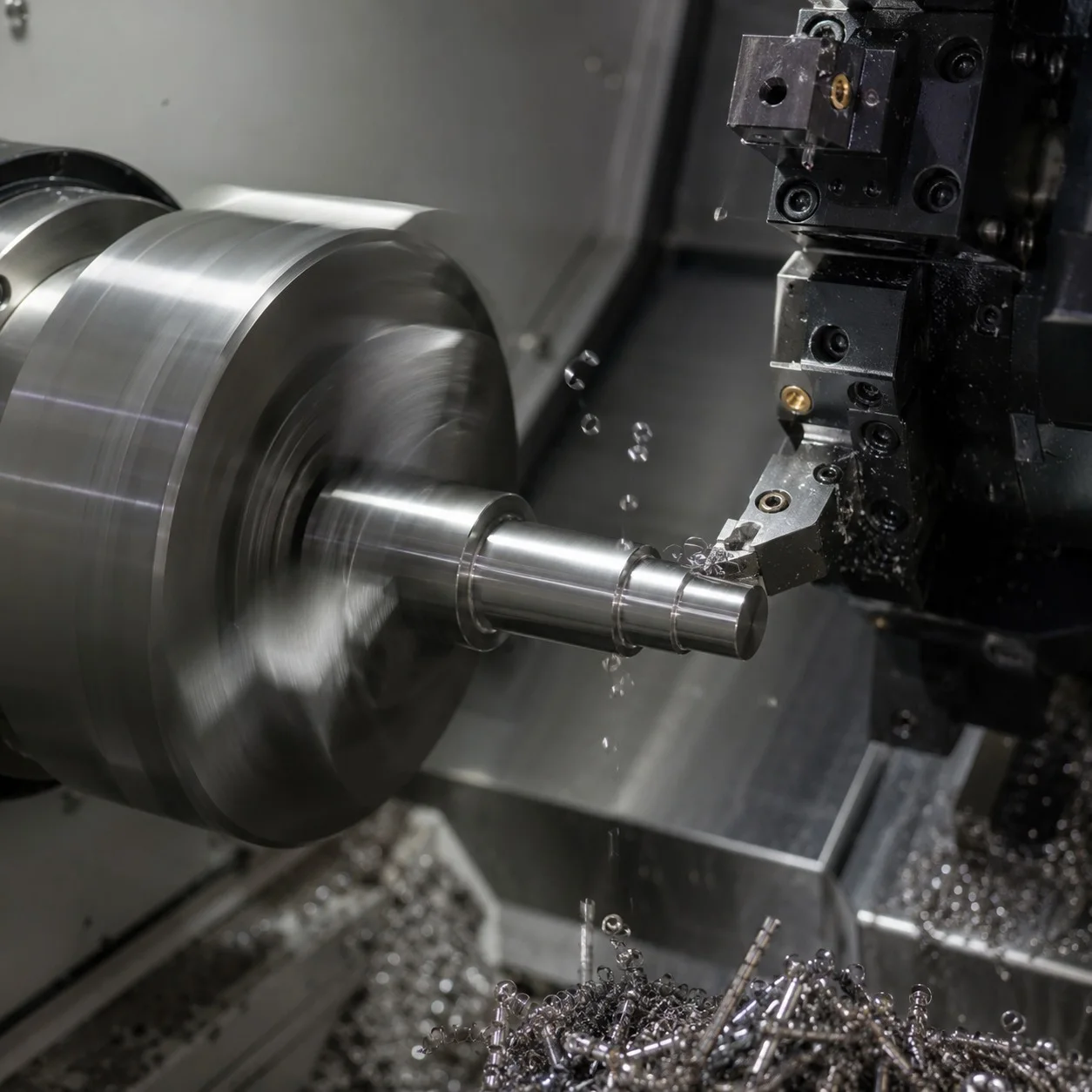
The CNC turning process is well suited to custom rotational parts with cylindrical, tapered, threaded, grooved, and concentric features. During machining, the workpiece rotates while cutting tools remove material from its outer diameter, inner diameter, face, or profile.
Depending on the part drawing, CNC turning operations for custom parts may include facing, OD turning, boring, grooving, parting, threading, drilling, reaming, knurling, and secondary milling. RapidMfgPro helps buyers compare these process requirements with the capabilities of potential CNC turning suppliers.
Discuss Your Turning Drawing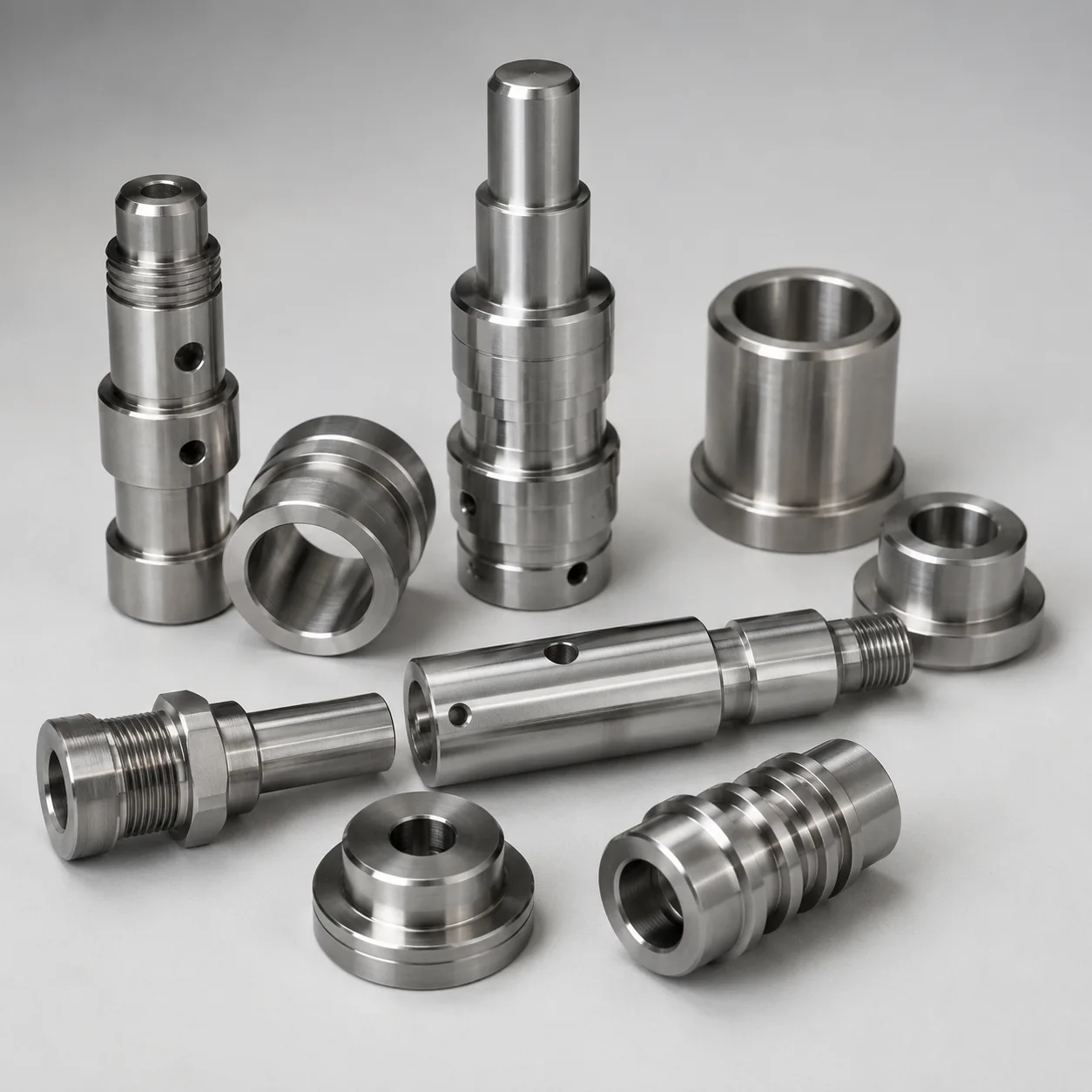
WHAT CNC TURNING DOES WELL
COMMON CNC TURNING APPLICATIONS
LEARN ABOUT CNC TURNING