Time to read: 8 min
How to Polish Nickel Plating Without Damaging the Finish
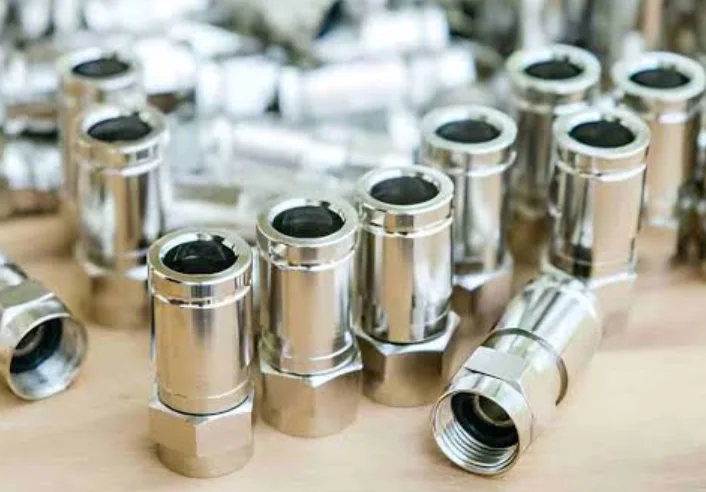
To polish nickel plating safely, start by washing the surface with mild soapy water and a soft microfiber cloth, dry it completely, and inspect the coating before using any polish. If the nickel layer is intact, apply a small amount of non-abrasive polish that is specifically suitable for nickel, chrome, or plated metal, work gently, and buff away the residue with a clean soft cloth.
The most important rule is to avoid treating nickel plating like solid metal. Polishing removes or modifies a small amount of surface material. Aggressive abrasives, steel wool, strong acids, harsh cleaners, or excessive machine buffing can thin the nickel layer and expose the material underneath.
| Surface Condition | Should You Polish It? | Recommended Action |
|---|---|---|
| Fingerprints or light dirt | Usually no polishing needed | Wash with mild soap and water |
| Light dullness or tarnish | Usually yes | Use a soft cloth and non-abrasive nickel-safe polish |
| Water spots or dried residue | Clean before polishing | Use mild cleaning first and reassess |
| Fine superficial scratches | Possibly | Very light polishing may reduce visibility |
| Yellow, brass, or copper-colored areas appearing through the finish | No | Stop polishing; the plating may already be worn through |
| Peeling or blistering | No | Replating or coating repair is normally required |
| Deep pits or scratches through the nickel layer | No | Polishing cannot restore missing plating |
Can Nickel Plating Be Polished?
Yes. Nickel plating can usually be polished when the coating is intact and the goal is to remove light dullness, superficial tarnish, fingerprints, stains, or very minor surface marks.
However, nickel plating is different from a solid nickel component. The visible nickel is a coating deposited over another material, which may be steel, brass, copper, aluminum, or another metal depending on the application.
Every abrasive polishing action removes or modifies some surface material. The more aggressive the polish, pressure, pad, or polishing time, the greater the risk of thinning the nickel coating.
This is why the safest approach is not to begin with the strongest available polish. Start with cleaning, inspect the finish, and increase polishing intensity only when necessary.
What Should You Check Before Polishing Nickel Plating?
Before choosing a polish, determine what is actually wrong with the surface. Dirt, oxidation, coating wear, scratches, plating defects, and exposed substrate can look similar from a distance but require very different treatments.
Is the Surface Dirty or Actually Tarnished?
A dull nickel surface does not automatically need abrasive polishing.
Fingerprints, oil, coolant residue, soap film, dried water minerals, wax, and environmental deposits can all reduce reflectivity. If the dull appearance disappears after washing with a mild detergent, additional polishing may provide little benefit while unnecessarily removing surface material.
Always clean first and polish second.
Is the Nickel Plating Still Intact?
Inspect edges, corners, raised features, threads, contact surfaces, and areas that have been repeatedly handled. These regions often lose plating before broad flat surfaces because they receive more contact or polishing pressure.
Warning signs include:
- a different metal color beginning to appear;
- yellow or copper-colored spots beneath a silver finish;
- uneven bright and dark patches that increase as you polish;
- visible substrate around edges;
- peeling or flaking;
- blisters beneath the coating.
If a different metal begins to appear while polishing, stop immediately. Additional polishing will not restore the nickel layer.
Is the Finish Polished, Satin, or Brushed?
Not every nickel-plated surface is intended to have a mirror finish.
Bright nickel plating may have a highly reflective appearance, while satin or brushed nickel intentionally has lower gloss or directional texture.
Using a mirror-polishing compound on a satin finish can create isolated shiny patches and permanently change its appearance.
Before polishing, identify the intended surface texture rather than assuming that maximum brightness is always the correct result.
Is There a Clear Coat or Other Top Layer?
Some decorative plated surfaces may also have lacquer, clear coating, wax, chrome, or another protective finish over the nickel system.
In these cases, a product marketed for bare nickel may actually be polishing the top coating instead of the nickel itself.
If the finish specification is unknown, test in a hidden location or check the original manufacturer's maintenance recommendation first.
How to Polish Nickel Plating Step by Step
For intact nickel plating, the safest method is a gradual process that begins with non-abrasive cleaning.
Step 1: Remove Loose Dirt
Use a clean microfiber cloth to remove loose dust and particles before rubbing the surface.
This step matters because particles trapped beneath the cloth can behave like an abrasive and create new scratches while polishing.
Step 2: Wash With Mild Soap and Water
Mix a small amount of mild dish soap with warm water.
Use a soft microfiber cloth or other non-abrasive cloth to gently clean the plated surface. Avoid aggressive scrub pads.
For grooves and corners, a very soft brush can help remove deposits without concentrating excessive pressure on one area.
Rinse away the soap where the component and application allow it.
Step 3: Dry the Nickel Completely
Use a clean lint-free cloth to dry the surface.
Do not leave water to evaporate on its own if water spotting is already part of the problem. Mineral residue left behind after evaporation can make the surface look dull again.
Step 4: Inspect the Surface Again
Once the surface is clean and dry, determine whether actual polishing is still required.
If the nickel now looks uniform, stop. There is no benefit in removing coating simply to perform an additional polishing step.
If dullness or light tarnish remains, continue with a suitable polish.
Step 5: Test the Polish on a Small Area
Choose a non-abrasive or very mild polish specifically identified as suitable for nickel, chrome, plated metal, or the particular finish being serviced.
Apply a small amount to a hidden or noncritical area first.
Check for:
- unexpected color change;
- loss of the original texture;
- excessive dark residue;
- visible substrate;
- uneven gloss.
If the test area changes significantly, do not continue over the entire surface.
Step 6: Polish Gently
Apply a small amount of polish to a soft cloth rather than flooding the nickel surface.
Use light pressure and work a small area at a time.
For polished nickel, small controlled circular movements are commonly suitable. For directional satin or brushed finishes, work with the existing surface direction instead of polishing randomly across it.
Avoid repeatedly polishing sharp edges and corners because coating removal can occur faster in these areas.
Step 7: Buff Away the Residue
Use a separate clean microfiber cloth to remove the remaining polishing compound.
Continue gently until the surface is uniform rather than trying to force it to become progressively brighter.
If additional passes are necessary, inspect the coating between passes.
Step 8: Rinse or Final-Clean if Required
Some polishing compounds leave oils, waxes, or fine abrasive residue behind.
Follow the polish manufacturer's cleaning instructions. Components used in fluid systems, electronics cooling systems, food equipment, medical devices, sealing systems, or other controlled applications may require a specified cleaning and rinsing procedure rather than ordinary household cleaning.
What Is the Best Polish for Nickel Plating?
The best product is usually not the most aggressive metal polish. It is the least aggressive product that achieves the required surface condition without thinning or changing the nickel coating.
| Method | Suitable For | Main Risk |
|---|---|---|
| Mild soap and microfiber | Dirt, fingerprints, grease, light residue | Very low when finish-compatible |
| Non-abrasive nickel/chrome polish | Light dullness and superficial tarnish | Over-polishing can still affect thin coatings |
| Very mild metal polish | More persistent dullness on known durable plating | May remove nickel if used aggressively |
| Steel wool or abrasive pad | Generally not preferred for intact plated surfaces | Scratching and coating removal |
| Power buffing | Controlled refinishing with known coating condition | Rapid coating removal, heat, rounded edges |
| Strong acid or alkaline cleaner | Only under a validated process | Attack, discoloration, undercutting, coating damage |
When the thickness or condition of the plating is unknown, a non-abrasive nickel-compatible polish is usually a safer starting point than a general-purpose cutting compound.
Can You Use Vinegar to Polish Nickel Plating?
Vinegar should not be treated as universally safe for nickel plating.
Diluted acidic cleaners are sometimes used to remove mineral deposits or certain stains from decorative nickel surfaces. However, plating systems differ in thickness, porosity, substrate, undercoats, topcoats, and chemical resistance.
An acidic solution that appears harmless on one household fixture may be unsuitable for nickel-plated copper cooling hardware, a precision CNC component, an antique plated object, or a part with an unknown plating stack.
For this reason, do not make concentrated vinegar or long acid soaking the default polishing method.
If the component manufacturer or finishing supplier specifically approves an acidic cleaning procedure, follow its concentration, contact time, rinsing, and drying instructions.
Can You Use Ammonia on Nickel Plating?
Ammonia is also not a universal nickel-polishing solution.
Some cleaning guides use ammonia for heavily tarnished decorative nickel, but prolonged or concentrated chemical exposure can damage certain plated surfaces or attack the plating system through defects and pores.
For valuable, precision, antique, thinly plated, or functionally plated components, a strong ammonia treatment should not be used simply because the surface looks dull.
Start with mild cleaning and a compatible polishing product instead.
Can You Use Steel Wool on Nickel Plating?
Steel wool is sometimes suggested for restoring heavily tarnished old plated objects, but it creates considerably more risk than a soft cloth.
Even very fine steel wool is still abrasive.
On thin nickel plating it can:
- create fine scratches;
- change surface texture;
- remove nickel from high spots;
- expose the substrate;
- produce an uneven patchy finish.
If the goal is preserving an intact nickel coating, steel wool should not be the first-choice polishing tool.
This becomes especially important for cosmetic CNC parts where a uniform reflective finish is part of the acceptance requirement.
Can You Use Baking Soda or Toothpaste on Nickel Plating?
Baking soda and toothpaste are often described as mild household polishing materials, but both can act as abrasives.
Their abrasiveness also varies between products, so the user has little control over the actual cutting action.
They may make some durable plated objects look brighter, but they are not automatically safer than a product specifically formulated for plated metal.
For a precision, cosmetic, or valuable nickel-plated component, a known non-abrasive polish is more predictable.
Can You Use WD-40 to Polish Nickel Plating?
WD-40 may help loosen greasy residue or provide temporary visual shine, but it should not be confused with a controlled nickel-polishing process.
It leaves an oily residue that may be unacceptable on parts that will later be assembled, bonded, sealed, coated, inspected for cleanliness, or used in fluid systems.
If an oil-based product is used during restoration, the final cleaning requirement should be considered before application.
How Do You Polish Tarnished Nickel Plating?
For light tarnish, first wash the surface and determine whether the discoloration remains after ordinary cleaning.
If the plating is intact:
- Clean with mild soap and water.
- Dry with a soft lint-free cloth.
- Test a nickel-compatible non-abrasive polish in a small area.
- Use light pressure and polish gradually.
- Remove all polish residue with a clean cloth.
- Inspect before performing another pass.
Do not continue increasing polishing pressure simply because some discoloration remains.
Dark areas can sometimes be staining, plating variation, pitting, or substrate exposure rather than removable tarnish.
How Do You Polish Scratched Nickel Plating?
The first question is how deep the scratch is.
Very Fine Surface Marks
Very light marks may become less visible with a very mild polish. The goal is to soften the visual contrast, not grind the entire surrounding surface down to the bottom of the scratch.
Deep Scratches
A deep scratch cannot safely be polished away if doing so would require removing a significant portion of the nickel coating.
If the scratch reaches the underlying substrate, polishing cannot replace the missing nickel.
Replating or refinishing is the appropriate repair when the coating itself has been penetrated.
Scratches Near Edges
Be particularly conservative near edges and corners. These areas are easy to over-polish because contact pressure is concentrated over a smaller surface.
How Do You Polish Old Nickel Plating?
Old nickel plating requires more caution than a newly manufactured finish because coating thickness and previous wear may be unknown.
Before trying to make an antique or aged plated surface mirror-bright, determine whether preserving the remaining nickel is more important than maximizing shine.
A slightly dull but complete coating can be more desirable than a highly polished surface with exposed substrate patches.
For old plating:
- clean gently first;
- avoid assuming every dark area is removable tarnish;
- check raised edges for coating loss;
- stop if a different metal color begins to appear;
- use the least abrasive polish possible;
- accept that some aged nickel will not return to a perfect mirror finish without replating.
How Do You Know if Nickel Plating Is Worn Through?
The clearest warning is the appearance of another metal beneath the silver-gray nickel surface.
Depending on the plating stack, exposed areas may appear yellow, brass-colored, reddish, copper-colored, gray, or darker than the surrounding nickel.
Other signs include:
- color changes that become larger while polishing;
- visible base material on corners;
- patches with a noticeably different reflectivity;
- plating edges around scratches;
- peeling or flakes.
Once the nickel layer is gone, polishing cannot restore it.
Continuing to rub the area usually makes the transition between remaining nickel and exposed substrate more obvious.
Can Peeling Nickel Plating Be Polished?
No. Peeling, blistering, or flaking indicates a coating adhesion problem rather than a polishing problem.
Possible causes can include poor surface preparation, contamination, corrosion beneath the coating, plating stress, impact, or service damage.
Polishing a loose coating can remove more nickel and enlarge the damaged area.
The correct response is usually to evaluate the coating failure and determine whether stripping, substrate preparation, and replating are required.
Can You Polish Brushed or Satin Nickel Plating?
Yes, but the objective should normally be to preserve the existing texture rather than turn it into a bright mirror finish.
Brushed and satin finishes rely on controlled surface texture to create their appearance.
Random circular polishing or a strong cutting compound can create localized shiny patches.
When cleaning or lightly polishing directional nickel:
- identify the grain direction;
- use a soft cloth;
- work with the surface direction;
- avoid aggressive compounds;
- test on an inconspicuous area.
Can You Machine-Buff Nickel Plating?
Nickel plating can be machine polished under controlled manufacturing or restoration processes, but power buffing is much less forgiving than hand polishing.
A buffing wheel can remove coating rapidly, particularly at:
- corners;
- edges;
- small bosses;
- raised lettering;
- thread entrances;
- thin projections.
Excessive pressure and speed can also create heat and make it difficult to maintain uniform material removal.
For an already finished plated part with unknown coating thickness, hand polishing is usually easier to control.
Production polishing should instead use a defined process with known plating thickness, compound, pad type, contact pressure, and cosmetic acceptance standard.
Why Does Nickel Plating Look Dull Again After Polishing?
If nickel becomes dull shortly after polishing, the problem may not be insufficient polishing.
Possible causes include:
- polishing compound residue;
- hard-water deposits;
- fingerprints and skin oils;
- high humidity;
- chemical exposure;
- heat;
- surface wear;
- porosity or defects in the plating;
- changes in an underlying coating layer.
Repeatedly polishing the nickel each time it becomes dull can gradually reduce the coating thickness.
Identify the environmental cause before increasing polishing frequency.
Should You Wax Nickel Plating After Polishing?
A compatible protective wax or sealant can sometimes reduce fingerprints, moisture exposure, and rapid loss of shine on decorative nickel surfaces.
However, wax should not be treated as a universal post-polishing step.
Avoid applying an unapproved protectant when the plated surface:
- operates at elevated temperature;
- contacts food;
- is inside a fluid path;
- will be bonded or coated later;
- has a defined cleanliness requirement;
- is part of medical or high-purity equipment.
For engineered components, the approved finishing specification should determine whether any sealant or post-treatment is allowed.
Electroplated Nickel vs Electroless Nickel: Does Polishing Differ?
Both surfaces can be polished, but they should not automatically be treated as identical coatings.
Electroplated Nickel
Electroplated nickel uses electrical current to deposit nickel onto the component.
Decorative systems may be selected specifically for brightness and appearance, while engineering electroplating may emphasize corrosion protection, thickness, or other functional properties.
Deposit thickness can vary with geometry and current distribution, so edges and high-current-density regions may behave differently from deep recesses.
Electroless Nickel
Electroless nickel is deposited through a controlled chemical reduction process without externally applied plating current.
One of its major engineering advantages is relatively uniform coating thickness over complex geometry.
Electroless nickel is frequently selected for corrosion resistance, wear behavior, dimensional coverage, and functional surfaces rather than appearance alone.
Because the coating may be part of a dimensional or functional requirement, aggressive polishing after plating can reduce the very coating thickness that was specified for performance.
Should You Polish a CNC Part Before or After Nickel Plating?
For precision CNC components, this is an important manufacturing decision.
If a highly reflective or low-roughness appearance is required, it is often better to create an appropriate substrate finish before plating rather than rely on aggressive polishing after the nickel has already been deposited.
Nickel plating follows the underlying surface condition to varying degrees. Deep milling marks, pits, chatter, dents, and scratches should not be expected to disappear simply because the part is plated.
RapidMFGPro's CNC machining and surface-finish guidance covers how machining quality and secondary finishing should be considered as one manufacturing sequence rather than independent steps.
Pre-Polishing Controls the Substrate
Mechanical polishing before plating can reduce machining marks and establish the required cosmetic texture while the component is still solid base material.
This avoids unnecessarily cutting into a finished nickel layer later.
Post-Plating Polishing Controls the Final Nickel Appearance
A light final polish may be used to improve appearance or remove superficial surface variation, but material removal should be controlled.
If post-plating polishing is part of the intended manufacturing route, the coating thickness should provide sufficient allowance for the process.
Can Polishing Nickel Plating Change CNC Part Dimensions?
Yes, particularly when polishing becomes aggressive.
Nickel plating already changes the dimensions of the original CNC-machined surface because coating material is added. Subsequent polishing removes some of that deposited material.
This can matter on:
- bearing diameters;
- precision bores;
- press fits;
- threads;
- seal lands;
- locating surfaces;
- thin edges;
- small holes.
For precision components, drawings should define whether dimensions apply before plating or in the final plated condition. The same planning principle is explained in RapidMFGPro's guide to controlling CNC machining tolerances after secondary processes.
Critical surfaces may require masking, plating allowance, limited polishing, post-finish inspection, or final machining depending on the function.
Can Polishing Fix Poor Nickel Plating?
Only cosmetic surface issues can sometimes be improved by polishing.
Polishing cannot reliably repair:
- poor adhesion;
- blisters;
- peeling;
- missing coating;
- deep pits;
- severe porosity;
- incorrect coating thickness;
- substrate defects visible through the finish.
Trying to polish away a plating defect may remove surrounding good nickel without eliminating the root cause.
When the defect originates from the plating process, replating or process correction is normally more appropriate than more polishing.
Mechanical Polishing vs Electropolishing: Are They the Same?
No.
Mechanical polishing uses physical contact and abrasive action to reduce surface irregularities.
Electropolishing is an electrochemical material-removal process most commonly associated with stainless steel and other suitable metals. It should not be confused with polishing a deposited nickel coating using a cloth or buffing compound.
If you are comparing different finishing routes for precision components, see RapidMFGPro's guide to electropolishing versus mechanical finishing.
How Should Nickel-Plated CNC Parts Be Specified?
For a commercial or precision-machined component, “nickel plated and polished” is often too vague.
A more complete specification should consider:
- base material;
- type of nickel process;
- required coating thickness;
- surfaces to be plated;
- surfaces to be masked;
- dimensions that apply after plating;
- target surface roughness where functional;
- bright, satin, brushed, or other visual requirement;
- approved cosmetic reference sample if appearance is critical;
- permitted polishing or buffing process;
- inspection requirements after finishing.
Defining these requirements before production prevents a supplier from interpreting “polished nickel” differently from the customer.
How RapidMFGPro Helps With Nickel-Plated CNC Parts
Nickel plating is often treated as a secondary operation, but for precision parts the machining, plating, polishing, masking, and inspection sequence must work together.
RapidMFGPro helps buyers identify independent manufacturing suppliers based on the actual requirements of the part rather than simply searching for a shop that lists “CNC machining” or “plating.”
For nickel-plated projects, supplier evaluation can include:
- base-material machining experience;
- required CNC milling or turning process;
- pre-plating surface preparation;
- electroplated or electroless nickel requirements;
- coating-thickness control;
- masking of threads, bores, and precision fits;
- cosmetic polishing capability;
- surface-roughness requirements;
- inspection after plating and polishing;
- prototype and production quantity.
A supplier that can create an attractive nickel finish is not automatically capable of controlling a close-tolerance plated bore, and a precision machine shop is not automatically experienced in cosmetic plating.
Matching the complete process route reduces the risk of receiving a part that looks good but no longer fits, or a dimensionally correct part with an unacceptable surface finish.
Frequently Asked Questions
Can You Make Nickel Plating Shiny Again?
Yes, if the nickel coating is still intact. Clean the surface first, then use a nickel-compatible non-abrasive polish with a soft cloth. If the substrate is already visible or the coating is peeling, polishing will not restore the missing nickel.
What Should You Not Use on Nickel Plating?
Avoid starting with aggressive abrasives, rough scouring pads, steel wool, strong acids, strong alkaline cleaners, or high-speed machine buffing when coating thickness and compatibility are unknown. These methods can scratch, thin, discolor, or remove the plating.
Can Tarnished Nickel Plating Be Restored?
Light surface tarnish can often be cleaned or polished. Severe discoloration caused by coating wear, pitting, substrate exposure, or plating failure may require replating instead.
How Often Should Nickel Plating Be Polished?
Polish only when cleaning no longer restores the required appearance. Repeated unnecessary polishing slowly removes surface material. Regular gentle cleaning is preferable to frequent abrasive polishing.
Can Nickel Plating Be Polished to a Mirror Finish?
Bright nickel can achieve a highly reflective appearance, but the final result depends on the plating process and the surface condition underneath it. If a mirror finish is a manufacturing requirement, control the substrate polishing and plating process rather than relying on heavy polishing of the completed coating.
Conclusion
The safest way to polish nickel plating is to use the least aggressive method that solves the actual surface problem. Clean first, inspect the plating, test a compatible non-abrasive polish, and work gradually with a soft cloth.
Do not continue polishing when another metal begins to show, the coating is peeling, or a deep defect extends through the nickel layer. Those conditions require coating repair or replating rather than more abrasion.
For CNC-machined parts, nickel polishing should also be treated as part of the complete finishing process. Coating thickness, dimensional allowance, surface roughness, masking, and final inspection should be planned before production so improving appearance does not compromise the function of the finished part.