Time to read: 20 min
What Is Soft Metal? Properties, Machining, and Selection for Custom Parts
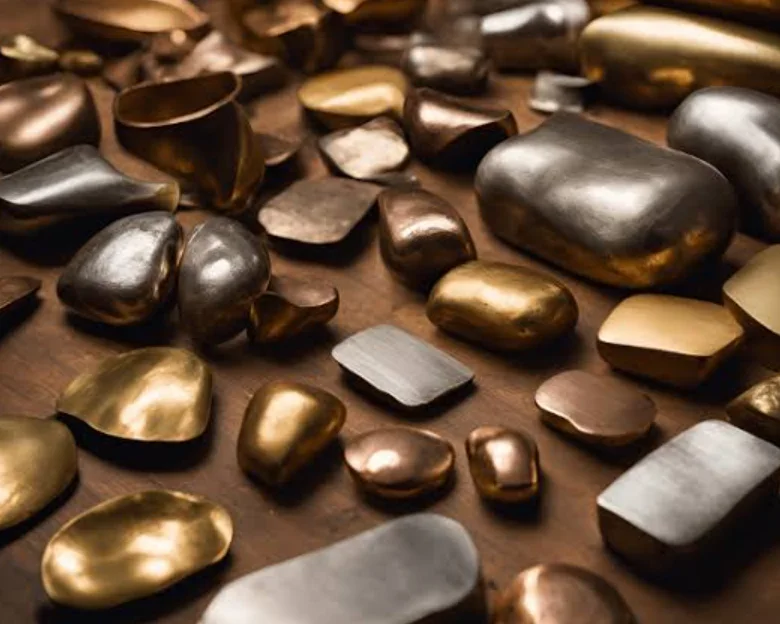
What is soft metal? In engineering, a soft metal is a metal or alloy condition that offers relatively low resistance to indentation, scratching, cutting, or permanent deformation compared with a harder reference material. “Soft metal” is not one formal material family, and softness should never be judged from the metal name alone. Alloy composition, temper, heat treatment, cold work, temperature, and product condition can all change hardness.
Lead, tin, indium, commercially pure aluminum, annealed copper, and soft tempers of some brass alloys are common examples. Cesium is frequently identified as one of the softest elemental metals, but it is highly reactive and melts at about 28.5°C, so it has little relevance to ordinary CNC part selection.
Most importantly, soft does not automatically mean weak, flexible, cheap, or easy to machine. Highly ductile soft metals can create burrs, long chips, built-up edge, surface smearing, and clamping distortion during CNC machining. The correct material therefore depends on both final part performance and manufacturing behavior.
| Question | Short Answer |
|---|---|
| What is a soft metal? | A relative description for a metal with comparatively low hardness or resistance to permanent deformation. |
| What is the softest metal? | Cesium is commonly cited among the softest elemental metals, but it is not a practical structural or CNC material. |
| What are common engineering soft metals? | Annealed copper, commercially pure aluminum, soft brass tempers, lead, tin, and indium. |
| Does soft mean weak? | No. Hardness, yield strength, tensile strength, stiffness, toughness, and ductility describe different behaviors. |
| Are soft metals easy to machine? | Not always. Low cutting force can help, but ductile materials may smear, stick to tools, form long chips, and create burrs. |
| Can a soft metal hold tight tolerances? | Yes, but tolerance depends on geometry, workholding, tooling, heat, burr control, process stability, and inspection—not softness alone. |
What Is Soft Metal?
A soft metal is best understood as a relative engineering description. It tells you how readily a material can be indented, scratched, cut, or plastically deformed compared with another material under defined conditions.
For example, aluminum may be called soft when compared with hardened tool steel. The same aluminum alloy, however, can be considerably harder than pure lead or indium. Even within one aluminum grade, an annealed condition can behave very differently from a cold-worked or precipitation-hardened temper.
This is why a drawing should not simply specify “soft aluminum” or “soft copper.” A supplier needs the actual alloy and material condition.
Softness Is Not a Fixed Property of a Metal Family
Calling an entire metal family soft can be misleading. Copper may be supplied annealed, half-hard, hard, or in other controlled tempers. Aluminum alloys can vary from highly formable commercially pure grades to much stronger heat-treated aerospace alloys.
Official Copper Development Association data for C11000, for example, lists substantially different mechanical properties for annealed and cold-worked conditions.
Therefore, when evaluating whether a metal is “soft,” always ask:
- What exact alloy is being compared?
- What temper or heat-treatment condition applies?
- Which hardness or deformation property matters?
- At what temperature will the material be used?
- Is the concern machining, forming, wear, sealing, or structural loading?
What Is the Softest Metal?
Cesium is commonly described as one of the softest elemental metals. The Royal Society of Chemistry describes caesium as a soft metal with a melting point of approximately 28.5°C and notes that it reacts rapidly with air and explosively with water. These properties make it scientifically interesting but unsuitable for normal structural components or conventional CNC machining. Royal Society of Chemistry data for caesium provides the relevant physical-property information.
For manufacturing, asking “What is the softest metal?” is often less useful than asking:
“Which relatively soft engineering metal provides the conductivity, formability, sealing behavior, weight, or other property my part requires?”
The metals engineers actually machine and specify are very different from highly reactive laboratory metals such as cesium.
| Soft Metal or Condition | Why It May Be Considered Soft | Typical Engineering Use | Manufacturing Consideration |
|---|---|---|---|
| Lead | Low hardness and easy plastic deformation | Shielding, ballast, specialized sealing | Low strength and special handling requirements limit general CNC use |
| Tin | Soft and readily deformable | Coatings, solder systems, specialized components | Rarely selected for loaded CNC structural parts |
| Indium | Extremely conformable | Vacuum seals and thermal interfaces | Used primarily where conformability is more important than structural strength |
| Commercially pure aluminum | Lower hardness than many heat-treatable aluminum alloys | Electrical parts, formed components, lightweight sheet products | Can burr or smear if machining conditions are poorly controlled |
| Annealed copper | Low hardness with high ductility | Busbars, terminals, heat spreaders, conductive components | Can produce long chips, adhesion, and difficult burrs |
| Soft brass temper | Annealing reduces hardness and increases formability | Drawn and stamped components | Do not assume machining behavior is the same as free-machining brass |
| Low-carbon steel | Relatively soft compared with hardened alloy or tool steel | General mechanical parts and fabricated components | “Soft” remains relative; steel is still much harder than lead or indium |
How Is Metal Softness Measured?
Engineers normally quantify metal softness by measuring hardness, rather than assigning a separate universal “softness number.” Hardness testing evaluates resistance to localized deformation under controlled conditions.
Brinell Hardness
The Brinell method presses a ball indenter into the material and evaluates the resulting indentation. It is widely used for metallic materials and can be useful where a relatively large indentation is appropriate. ASTM describes the Brinell test as an indentation hardness test that provides information useful for material selection and quality control. ASTM E10 defines the Brinell test method for metallic materials.
Rockwell Hardness
Rockwell testing determines hardness from indentation depth under specified loads. Different Rockwell scales are used because one indenter and load combination is not appropriate for every hardness range or material thickness. ASTM E18 defines Rockwell hardness testing for metallic materials.
Vickers Hardness
Vickers testing uses a diamond indenter and can be useful across a broad hardness range, including relatively small areas or thin sections when a suitable test load is selected. ASTM E92 covers Vickers and Knoop indentation hardness testing of metallic materials.
Why the Mohs Scale Is Not Enough for CNC Material Selection
The Mohs scale ranks scratch resistance and is useful in mineralogy, but CNC engineers usually need quantitative indentation hardness, strength, ductility, temper, and machinability data. A statement such as “Metal A is softer than Metal B on the Mohs scale” does not tell you whether Metal A will produce cleaner threads, lower burrs, better surface finish, or easier dimensional control.
Does Soft Metal Mean Weak, Ductile, or Malleable?
No. One of the most common material-selection mistakes is treating hardness, strength, ductility, malleability, and stiffness as different words for the same property.
Softness vs Strength
Hardness describes resistance to localized deformation. Yield strength describes the stress at which permanent bulk deformation begins, while tensile strength describes the maximum tensile stress reached during a tensile test.
A material with low hardness often also has relatively low yield strength, but the relationship is not universal enough to substitute one property for another. Structural decisions should use actual grade- and condition-specific mechanical properties.
Softness vs Ductility and Malleability
Ductility describes the ability to plastically deform under tensile loading before fracture. Malleability generally describes the ability to undergo compressive forming into shapes such as sheet or foil.
A soft metal may also be highly ductile, but low hardness alone does not prove that a material will perform well during deep drawing, bending, crimping, or severe forming.
Softness vs Stiffness
Softness also should not be confused with stiffness. Stiffness is related to elastic modulus and describes how much a material elastically deflects under load. A surface can be relatively soft while the material still has substantial elastic stiffness.
This distinction matters in CNC machining because workpiece deflection is influenced by geometry and elastic stiffness, not simply by indentation hardness.
Why Are Some Metals Softer Than Others?
Metal hardness is influenced by composition, microstructure, dislocation movement, and previous processing. For practical part selection, several factors are especially important.
Alloy Composition
Pure metals are often softer than alloys that have been strengthened through alloying, precipitation, or other mechanisms. Commercially pure aluminum, for example, is generally softer than many heat-treatable aluminum alloys used for structural CNC parts.
Annealing
Annealing can reduce the effects of previous cold work and restore greater ductility. Annealed copper or brass therefore behaves differently from heavily cold-worked material of similar composition.
Cold Work
Rolling, drawing, bending, forming, and other plastic deformation can increase strength and hardness through work hardening. The material condition after processing may therefore be more important than the original raw-material condition.
Temperature
Many metals become easier to plastically deform as temperature increases. This is another reason why “soft” should never be treated as a universal condition independent of service temperature.
Soft Metal vs Hard Metal: Which Is Better?
Neither is inherently better. Hard and soft metals solve different design problems.
A harder material may be favored for wear surfaces, heavily loaded threads, sliding contact, or components that must resist denting. A softer material may be useful when a part must conform, crimp, deform around another component, form into a complex shape, or act as a sacrificial surface.
| Design or Manufacturing Factor | Softer Metal Tendency | Harder Metal Tendency |
|---|---|---|
| Indentation resistance | Lower | Higher |
| Forming force | Often lower when the material is also ductile | Often higher |
| Wear resistance | May be lower | Often better, depending on alloy and surface condition |
| Thread durability | Greater risk of deformation or stripping | Usually better when strength is also adequate |
| Cutting force | Can be lower | Can be higher |
| Chip behavior | Ductile materials may form long, continuous chips | Depends strongly on alloy and heat treatment |
| Burr formation | Can be significant in ductile materials | Not automatically eliminated by greater hardness |
| Clamping damage | Higher risk of dents and distortion | Generally more resistant to local clamping damage |
Density, corrosion resistance, electrical conductivity, thermal conductivity, and raw-material cost do not consistently increase or decrease with hardness. They must be evaluated independently.
Are Soft Metals Easier to CNC Machine?
Not necessarily. This is one of the most important misconceptions about soft metal machining.
A relatively soft material may require lower cutting forces, but soft and ductile metals can create a different set of CNC problems. Research on aluminum micromilling has documented built-up-edge behavior, while NIST manufacturing work has treated burr formation and deburring as important process-planning problems rather than trivial finishing issues.
Built-Up Edge Can Damage Surface Finish
Ductile material can adhere to the cutting edge instead of flowing cleanly away as a chip. The accumulated material changes the effective cutting geometry and can periodically detach onto the workpiece.
The result can be inconsistent surface finish, dimensional variation, and accelerated loss of cutting-edge performance.
Soft Metals Can Produce Long Chips
Highly ductile metals may produce long continuous chips instead of short, easily evacuated chips. These chips can wrap around tools or workpieces, interfere with coolant flow, scratch finished surfaces, or be recut.
Chip-breaker geometry, feed, cutting speed, coolant or air delivery, and toolpath strategy therefore matter even when the metal itself is relatively soft.
Burrs Can Be More Difficult Than the Cutting Operation
Soft material near an unsupported edge may plastically deform instead of separating cleanly. Burrs can appear around drilled holes, milled edges, slots, chamfers, threads, and cutoff faces.
NIST research on deburring emphasizes that burr type and location are connected to machining operations and should be considered during process planning.
Clamping Can Deform the Part
A vise or fixture must hold the workpiece securely enough to resist machining force. With a thin or soft workpiece, excessive clamping force can locally dent the surface or distort the component.
If the distorted part is machined while clamped and then springs or relaxes after release, the final free-state geometry can differ from the measured geometry in the fixture.
Threads Can Tear or Strip
Small threads in relatively soft metals can deform during cutting or assembly. Internal threads may also have limited resistance to stripping when high clamp load is required.
Depending on the application, designers may need more thread engagement, a larger thread, a threaded insert, controlled assembly torque, or a stronger material condition.
Can Soft Metals Be CNC Machined to Tight Tolerances?
Yes, but softness does not automatically make a material more precise to machine.
CNC tolerance is a system result involving machine capability, material condition, part geometry, fixture rigidity, workpiece stiffness, cutting forces, tool condition, thermal effects, residual stress, burrs, finishing sequence, and inspection conditions.
A soft aluminum or copper part may be machined accurately with the correct process. However, a thin wall that distorts under clamping, a bore with a heavy burr, or a copper feature that smears under a worn tool can still fail dimensional or surface requirements.
If tolerance is a major design constraint, see RapidMFGPro's guide to controlling CNC machining tolerances, which explains how geometry, workholding, tooling, temperature, finishing, and inspection interact.
How Should Soft Metals Be CNC Machined?
There is no single cutting recipe for every soft metal. Annealed copper, pure aluminum, soft brass, lead, and indium behave differently. However, several process principles are useful for ductile soft-metal machining.
Use Sharp Cutting Edges
A sharp edge promotes shearing instead of pushing and plowing the material. Excessively dull or heavily honed tooling can increase smearing and burr formation in a soft, ductile workpiece.
Control Material Adhesion
Tool geometry, surface condition, coolant or lubricant selection, and chip evacuation should reduce material adhesion to the cutting edge. Built-up edge is especially relevant in machining aluminum and other ductile materials.
Plan Chip Evacuation
Deep pockets and enclosed features need adequate space for chips to leave the cutting zone. Recutting long chips can damage both the tool and the machined surface.
Reduce Unnecessary Clamping Pressure
Use workholding that distributes load over appropriate areas. Soft jaws, shaped fixtures, vacuum fixtures, sacrificial tabs, or broader contact surfaces may be appropriate depending on geometry and production volume.
Plan Deburring Before Production
Do not assume that burrs can always be removed easily after machining. Burr direction and accessibility matter on small holes, intersecting passages, precision slots, threads, sealing surfaces, and cosmetic edges.
A deburring operation that is trivial on an open plate can become expensive on a deep internal feature.
Match the Supplier to the Material
A supplier experienced with free-machining aluminum does not automatically have equivalent experience with gummy copper or extremely soft specialty metals. For buyers sourcing custom parts, the relevant question is whether the supplier has demonstrated control over the particular alloy, temper, geometry, surface requirement, and production quantity.
RapidMFGPro's CNC machining supplier-matching guide explains how process capability, material behavior, tolerance, inspection, and secondary operations should be considered together.
How Do Aluminum and Copper Behave as Soft Metals?
Is Aluminum a Soft Metal?
Aluminum can be relatively soft, but the answer depends strongly on grade and temper. Commercially pure and annealed aluminum conditions are generally softer than heat-treated structural alloys.
That does not mean all aluminum machines the same way. A highly ductile aluminum condition can produce different chips and burrs from a stronger precipitation-hardened machining alloy.
For grade-specific selection, see RapidMFGPro's aluminum material guide.
Is Copper a Soft Metal?
Annealed pure copper is a good example of why softness and machinability should not be treated as synonyms. Copper can be soft and highly ductile while still requiring careful tool geometry and chip control during machining.
C11000 data from the Copper Development Association shows that its properties vary significantly with temper and lists extensive cold-working applications for the alloy. Copper Development Association C11000 data illustrates why the exact material condition should accompany the alloy designation.
For conductive CNC components such as busbars, terminals, and heat-transfer parts, see RapidMFGPro's copper material guide.
When Is Softness Useful in a Manufactured Part?
Softness is not a defect when the design needs controlled deformation.
Electrical Connections
Annealed copper can deform during crimping and other joining operations while maintaining high electrical conductivity. The combination of conductivity and formability is often more important than maximizing hardness.
Conforming Seals and Interfaces
Soft metallic sealing materials can conform to small surface irregularities under compression. In these applications, the ability to deform locally is the reason the material is selected.
Formed Components
Soft or annealed conditions may improve manufacturability when sheet must undergo bending, drawing, spinning, embossing, or other plastic deformation.
Sacrificial or Conforming Surfaces
Some bearing systems deliberately combine a stronger backing with a softer functional layer. The objective is not maximum hardness everywhere, but appropriate behavior at the contact surface.
When Does a Soft Metal Create Design Problems?
Wear Surfaces
A soft unprotected surface may wear, score, or dent under repeated sliding or abrasive contact. If wear resistance controls service life, the designer may need a harder alloy condition, coating, insert, or different material.
Loaded Threads
Threads transfer load through relatively small contact areas. A material that deforms readily may strip or lose thread geometry if the joint load exceeds its capability.
Bolted Joints
Local embedding or time-dependent deformation beneath a fastener can reduce retained clamp load in some soft-material joints. Washer geometry, preload, material condition, and joint design therefore matter.
Press Fits
A press fit depends on controlled interference and material response. If the softer component yields excessively during assembly, the final contact pressure may be lower than expected.
Do not select a press-fit tolerance based only on nominal material hardness. Geometry, wall thickness, yield behavior, surface condition, temperature, and mating-part properties should also be evaluated.
How Should Soft Metal Be Specified on an Engineering Drawing?
For purchasing and CNC machining, “soft metal” is not a sufficient material callout.
A production drawing should identify the material condition precisely enough that the supplier and inspector are evaluating the same requirement.
Depending on the part, specify:
- exact alloy or material designation;
- temper, heat-treatment, or annealed condition;
- applicable material specification;
- product form where relevant;
- hardness range if hardness is functionally important;
- surface finish or coating requirements;
- critical dimensions and GD&T;
- edge-break or burr requirements;
- material certification requirements;
- inspection requirements.
For example, “C11000 copper, annealed condition” communicates far more useful manufacturing information than “soft copper.” Likewise, “Aluminum 1100-O” is meaningfully different from a generic callout such as “soft aluminum.”
Which Soft Metal Should You Choose for a CNC Part?
Select the material from the functional requirement first, then determine whether its softness creates manufacturing or durability risks.
- Need high electrical conductivity? Annealed copper may be appropriate, but evaluate chip control and burr removal.
- Need a lightweight and highly formable metal? Commercially pure or annealed aluminum may be suitable if its strength meets the design requirement.
- Need a conforming vacuum or thermal interface? A specialty soft metal such as indium may provide useful deformation behavior.
- Need wear-resistant threads or sliding surfaces? A very soft condition may be the wrong choice even if it is easy to deform.
- Need both formability and later strength? Material condition and manufacturing sequence may matter more than simply choosing the nominally softest alloy.
Raw material hardness alone should therefore never decide the final CNC material.
How RapidMFGPro Helps With Soft-Metal CNC Machining
Soft-metal projects require more than finding a supplier with an available CNC machine. The supplier should understand the specific behavior of the alloy and condition being quoted.
For example, a shop accustomed to machining 6061-T6 aluminum may not automatically have the same experience controlling burrs, long chips, thin-wall deformation, or thread quality in annealed copper. Likewise, a supplier that can machine a simple copper plate may not be the right choice for a thin conductive component with small threaded features and demanding cosmetic surfaces.
RapidMFGPro can organize supplier matching around:
- specific alloy and temper;
- CNC milling or CNC turning requirements;
- thin walls and distortion risk;
- thread and press-fit features;
- surface-finish and burr requirements;
- medium-, high-, or more demanding precision requirements;
- inspection and documentation needs;
- prototype or production quantity.
When sufficient drawings and project information are available, supplier matching is typically organized within one to two days. Buyers can then communicate directly with the selected independent manufacturer about tooling, process assumptions, tolerances, inspection, finishing, pricing, and delivery. If supplier performance does not meet expectations, feedback can be reviewed and another supplier match considered.
Frequently Asked Questions
What Is the Softest Metal in the World?
Cesium is commonly cited as one of the softest elemental metals. It is a very soft alkali metal with a melting point near 28.5°C, but its high reactivity means it is not a practical choice for ordinary CNC or structural parts.
Is Aluminum a Soft Metal?
Some aluminum grades and tempers are relatively soft, especially commercially pure and annealed conditions. Heat-treated structural aluminum alloys can be substantially harder and stronger, so the exact alloy and temper should always be specified.
Is Copper Softer Than Aluminum?
There is no reliable universal answer without naming the exact copper and aluminum grades and conditions. Annealed copper and commercially pure aluminum can both be relatively soft, while cold work and heat treatment can change their hardness significantly.
Does a Soft Metal Machine Faster?
Sometimes lower cutting resistance permits efficient material removal, but softness alone does not determine cycle time. Built-up edge, chip evacuation, burr removal, distortion, workholding, surface finish, toolpath, and inspection can increase the finished machining cost.
Can Soft Metal Parts Have Good Surface Finish?
Yes. Good surface finish is achievable with appropriate tooling and process control. However, ductile soft materials are susceptible to smearing, adhesion, burr formation, and handling marks, so sharp cutting edges, chip control, workholding, and secondary finishing may become important.
Conclusion
A soft metal is a metal or material condition with relatively low resistance to indentation or permanent deformation, not a single formal group of materials. Cesium is an extreme example, while annealed copper, commercially pure aluminum, lead, tin, indium, and soft brass tempers are more relevant to practical engineering.
Softness can help with forming, crimping, sealing, and conforming contact, but it can create problems in threads, wear surfaces, press fits, and precision machining. Most importantly, soft does not automatically mean weak or easy to machine. For CNC parts, evaluate the exact alloy and temper together with chip behavior, burrs, workholding, geometry, tolerances, surface requirements, and final service conditions before choosing the material.
Need Help Reviewing a Custom Part?
Share your CAD file and requirements to request supplier matching. Supplier capability and commercial terms must be verified before order placement.
Request Supplier Match