Time to read: 4 min
When Should You Choose Steel Materials for Your Parts?
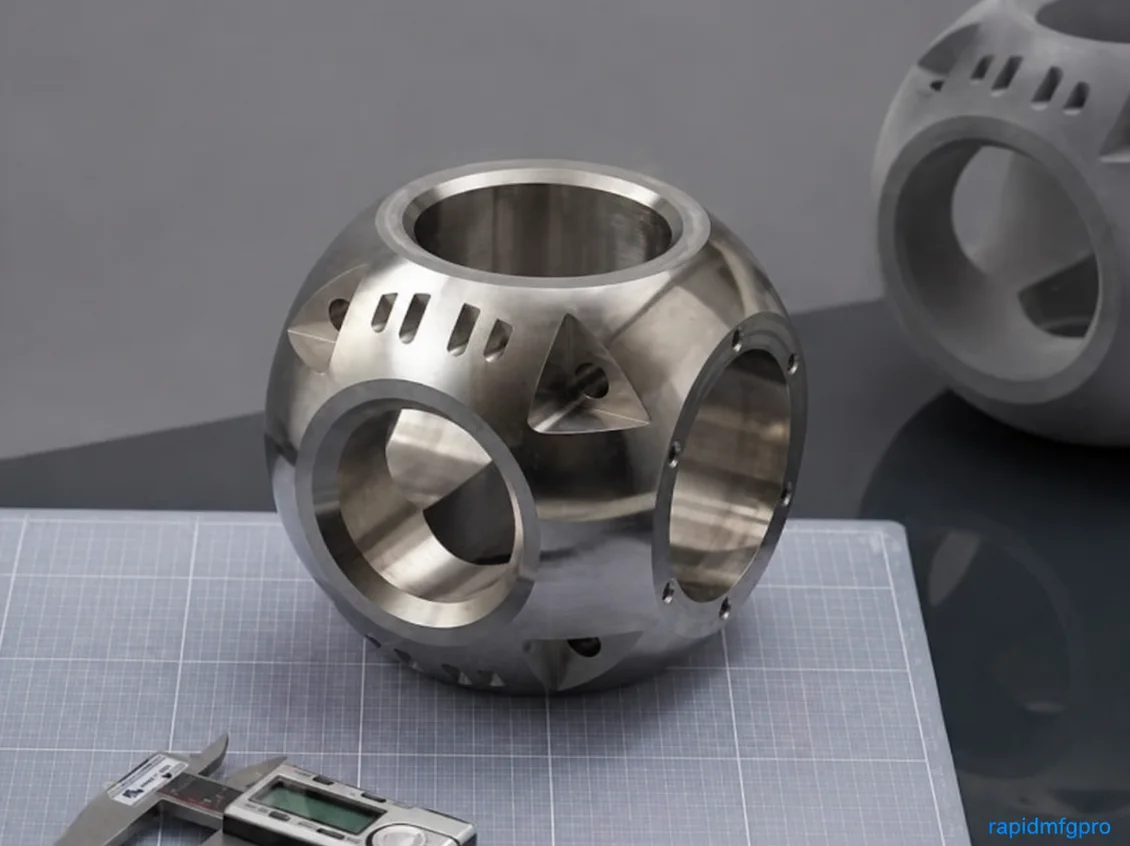
When should you choose steel? Steel is usually a strong choice when a part needs high stiffness, substantial load capacity, durable threads or bearing surfaces, wear resistance, fatigue performance, heat-treatment flexibility, or a practical balance between mechanical performance and finished cost. It is particularly suitable for shafts, gears, pins, rollers, fixtures, tooling, machine components, and structural parts where rigidity and durability matter more than minimum weight.
However, choosing “steel” is only the beginning. Carbon steel, free-machining steel, alloy steel, stainless steel, tool steel, hot-rolled stock, cold-finished stock, annealed material, and prehardened material can behave very differently. The correct choice depends on how the part can fail, its operating environment, manufacturing route, required material condition, and total cost after machining, heat treatment, inspection, and finishing.
| If Your Part Needs... | Steel Is Often a Good Choice When... | What to Check Before Choosing |
|---|---|---|
| High rigidity | The part must resist bending, twisting, or fixture movement | Geometry may matter more than choosing a stronger steel grade |
| High load capacity | The part experiences substantial tensile, bending, torsional, or contact loads | Yield strength, toughness, fatigue, grade, and heat treatment |
| Wear resistance | Surfaces slide, roll, locate, or repeatedly contact other components | Hardness, case depth, lubrication, toughness, and contact stress |
| Heat-treatment flexibility | You need to tailor surface hardness, core toughness, or overall strength | Machining sequence and heat-treatment distortion |
| Outdoor durability | Stainless steel or protected carbon steel can meet the environment | Humidity, chlorides, chemicals, coating damage, and maintenance |
| Economical production | Common grades are readily available and machining routes are well established | Finished-part cost rather than raw steel price alone |
| Minimum weight | Mass is not a primary design constraint | Aluminum or titanium may provide a better strength-to-weight solution |
When Is Steel the Right Material for a Part?
Choose Steel When Stiffness and Deflection Matter
Steel is often a good choice for shafts, machine supports, tooling bodies, fixtures, bearing carriers, guide components, brackets, and other parts that must remain rigid under load. Its relatively high elastic modulus allows a compact steel section to resist elastic deflection effectively.
But strength and stiffness are not the same property. Moving from a mild steel to a high-strength alloy steel may greatly increase the stress required to permanently deform a part without creating a similar increase in elastic stiffness. Many engineering steels have broadly similar elastic moduli, so geometry often has a larger influence on deflection than grade strength.
For example, if a shaft bends slightly under normal operating load but returns to its original position afterward, simply replacing 1018 with a much stronger alloy may not significantly reduce that movement. Increasing shaft diameter, reducing unsupported length, changing bearing spacing, modifying the cross-section, or adding structural support can produce a much larger improvement.
Higher-strength steel becomes more valuable when the actual problem is yielding, permanent deformation, fatigue, or another strength-controlled failure rather than normal elastic displacement.
Choose Steel When the Part Must Carry High Loads
Steel offers a broad range of mechanical properties through changes in composition, microstructure, manufacturing condition, and heat treatment. That makes it useful when a component experiences tensile loads, compression, bending, torsion, impact, or repeated cyclic loading.
A simple spacer or lightly loaded mounting bracket may perform well in low-carbon steel, while a heavily loaded shaft, pin, axle, gear, or clamp may justify medium-carbon or alloy steel. More demanding components may require a specified quenched-and-tempered condition, case hardening, controlled toughness, hardness testing, or material certification.
Do not select steel from tensile strength alone. Yield strength, toughness, fatigue behavior, stress concentration, section size, operating environment, and the expected failure mode all matter. A stronger material that provides no useful performance benefit can increase raw material and machining cost unnecessarily.
Choose Steel When Wear Resistance Is Important
Steel is particularly useful for gears, pins, rollers, wear plates, shafts, dies, punches, locating features, bearing seats, and other parts exposed to sliding, rolling, or repeated mechanical contact.
One advantage of steel is that the entire component does not necessarily need to have the same hardness. Different steel grades and heat-treatment routes can create a hard working surface while maintaining a tougher core.
- Through hardening can increase hardness across a substantial portion of the section.
- Carburizing can create a hard wear-resistant case around a tougher core.
- Nitriding can produce a hard surface layer on compatible steels.
- Induction hardening can selectively treat journals, tracks, gear teeth, and other local regions.
- Tool steels can provide high hardness and wear resistance for dies, molds, gauges, and tooling components.
Hardness, however, should not be maximized automatically. A very hard steel may resist abrasive wear while becoming less tolerant of impact, sharp stress concentrations, or edge loading. The correct steel depends on the actual wear mechanism and service conditions.
Choose Steel When You Need Properties That Can Be Modified by Heat Treatment
Heat-treatment flexibility is one of steel's major engineering advantages. Quenching and tempering, carburizing, nitriding, induction hardening, and precipitation hardening can produce very different combinations of hardness, strength, wear resistance, fatigue resistance, and toughness.
This is valuable when requirements conflict. A gear may need hard teeth but a tougher core. A shaft may require high strength while retaining enough toughness to resist shock. A die may need excellent wear resistance without becoming excessively brittle.
The important point is that the steel grade and final condition should be selected together. “4140” alone does not tell a CNC supplier whether the material will arrive annealed, normalized, prehardened, or require post-machining heat treatment.
Choose Steel When Temperature, Pressure, or Impact Conditions Are Demanding
Temperature can change whether a particular steel grade is suitable. Components used in pressure systems, heavy machinery, transportation equipment, industrial systems, or energy applications may require mechanical properties that remain adequate at temperatures very different from room temperature.
Low-temperature service can be especially important because a material may retain high strength while losing useful impact toughness. High-temperature environments may introduce other concerns such as strength loss, oxidation, thermal cycling, or creep depending on temperature and service duration.
The useful engineering question is therefore not simply “Is steel strong?” It is whether the specific steel grade, heat-treatment condition, and section size retain the required properties under the actual temperature, pressure, impact, and fatigue conditions.
Choose Steel When Material Availability Matters
Common steels are available in many stock forms, including round bar, plate, sheet, tubing, ground bar, forged stock, and cold-finished material. This can make steel practical for both prototypes and repeat production.
Availability should still be checked before locking a drawing to a particular grade. A technically suitable steel can become an expensive production choice if the required diameter, thickness, stock condition, certification, or regional supply is difficult to obtain.
Starting-stock dimensions also affect CNC cost. A blank close to the finished geometry reduces material waste, roughing time, tool wear, and machine hours. For a broader overview of steel choices, see RapidMFGPro's steel materials for custom manufacturing.
Will Higher-Strength Steel Make a Part Stiffer?
Usually not by much if the geometry remains unchanged. This is one of the most common material-selection misconceptions.
Elastic stiffness is primarily related to elastic modulus and component geometry. Yield strength determines when permanent deformation begins. Two steels can have very different yield strengths while their elastic moduli remain relatively similar.
Consider a long steel shaft that deflects too much during normal operation but never permanently bends. Replacing it with a stronger alloy may raise the load at which permanent deformation begins, but the shaft can still exhibit a similar amount of elastic movement under its normal load.
If deflection is the real problem, diameter, wall thickness, unsupported length, cross-sectional geometry, and support conditions often deserve attention before specifying a higher-strength grade.
Which Type of Steel Should You Choose?
| Steel Family | Typical Examples | Why You Might Choose It | Important CNC Consideration |
|---|---|---|---|
| Low-carbon steel | 1018, 1020 | General mechanical parts, economy, availability, weldability | Soft material can produce burrs, smearing, and built-up edge |
| Free-machining steel | 12L14, 1215 | High-volume turned components and shorter cycle times | Good machinability does not guarantee good welding or corrosion performance |
| Medium-carbon steel | 1045, C45 | Shafts, pins, rollers, moderate strength and wear requirements | Final heat-treatment condition should be defined early |
| Alloy steel | 4140, 4340, 8620 | Higher strength, fatigue resistance, toughness, hardenability, or case hardening | Material condition strongly affects tooling and finishing route |
| Stainless steel | 303, 304, 316, 17-4 PH | Corrosion resistance, cleanliness, or corrosion plus strength | Machinability differs significantly between grades |
| Tool steel | A2, D2, O1, H13 | Dies, molds, tooling, wear surfaces, and gauges | Often rough machined before hardening and finished afterward |
When Should You Choose Carbon Steel?
Carbon steel is appropriate when useful strength, stiffness, availability, and cost matter more than exceptional corrosion resistance or specialized high-temperature performance.
Low-carbon steels are commonly suitable for brackets, fixtures, spacers, mounts, basic shafts, housings, and general machine components. Medium-carbon grades can provide greater strength, hardness, and wear potential for shafts, rollers, pins, and more heavily loaded parts.
Carbon content also affects weldability and heat-treatment response, so the cheapest grade is not automatically the best choice for every fabrication route.
When Should You Choose Alloy Steel?
Alloy steel becomes attractive when conventional carbon steel cannot provide the required combination of strength, hardenability, toughness, fatigue performance, or wear resistance.
4140 is widely considered for shafts, gears, bolts, axles, fixtures, and loaded machine parts. 4340 may be used where still higher strength and toughness are required. 8620 is commonly associated with applications that benefit from a hard carburized case and tougher core.
However, grade name alone is insufficient. Annealed 4140 and prehardened 4140 create different machining conditions and manufacturing routes even though both are 4140.
When Should You Choose Stainless Steel?
Stainless steel makes sense when corrosion resistance, hygiene, chemical exposure, cleanliness, appearance, or reduced maintenance is important enough to justify its higher material or machining cost.
Stainless steel should also be treated as a group of materials rather than a single alloy. 303, 304, 316, 17-4 PH, martensitic stainless steels, and duplex grades behave differently in machining and service.
For example, 303 may be selected where machinability is especially important, while 304 and 316 are widely used when corrosion performance is the stronger requirement. 17-4 PH may be considered when higher strength and corrosion resistance need to be combined.
Does Hot-Rolled or Cold-Rolled Steel Matter for CNC Parts?
Yes, but one is not universally better than the other.
Hot-rolled steel is generally economical and suitable where enough machining allowance is available. Its original surface is usually rougher and its stock dimensional accuracy is lower than cold-finished material. For a heavily machined component where almost every original surface will be removed, this may be perfectly acceptable.
Cold-rolled or cold-finished steel can provide better initial dimensional consistency and surface condition. It may reduce preparation work for simple shafts, bars, and parts that retain some original stock surfaces.
However, cold working can also introduce residual stress. Removing material unevenly may disturb the original stress balance and cause movement.
Therefore, “cold-finished steel is more dimensionally accurate as stock” does not mean “cold-finished steel always creates the most dimensionally stable CNC part after heavy machining.”
Which Steel Should You Choose When Heavy Machining May Cause Distortion?
For some precision parts, stock condition can be just as important as nominal steel grade.
Imagine machining a thin frame from a thick steel plate or removing most of the cross-section from one side of a steel block. Internal stresses that were balanced in the original material can become unbalanced as stock is removed. The component may then bow, twist, or move after it is released from the fixture.
This is especially relevant for:
- thin frames machined from thick plate;
- large pockets;
- long rails and beams;
- rings with thin finished walls;
- large asymmetrical components;
- parts where 60–80% or more of the original stock is removed.
For these parts, evaluate how the stock was rolled, drawn, forged, or heat treated; whether stress-relieved stock is available; how much material will be removed from each side; whether rough machining can be balanced; and whether the component needs time or stress relief between roughing and finishing.
A common strategy is to rough machine the part, leave finishing allowance, allow stresses to redistribute, re-establish the datums, and then finish the critical surfaces.
This is why selecting “a more stable steel grade” is sometimes the wrong question. The stock condition and machining sequence may be what really determines dimensional stability.
Is Softer Steel Always Easier to CNC Machine?
No. Soft and easy to machine are not the same thing.
Low-carbon steel can be relatively soft and ductile but still create difficult chips, burrs, smearing, or built-up edge. These effects can reduce surface finish quality and make chip control more difficult.
A moderately harder or machinability-optimized steel can sometimes produce more predictable cutting behavior.
At the other end of the spectrum, hardened alloy and tool steels can increase cutting forces, reduce practical cutting speed, accelerate tool wear, and sometimes require hard turning, grinding, or specialized tooling.
Machinability therefore depends on much more than hardness. Carbon content, alloying, microstructure, sulfur content, material condition, tool material, cutting parameters, and operation type can all affect CNC performance.
If Free-Machining Steel Cuts So Well, Why Not Use It for Every Part?
Free-machining steels can offer excellent chip breaking, high cutting speeds, predictable surface finish, and good tool life. Those characteristics can substantially reduce the cost of high-volume turned parts.
But machinability is only one part of material selection.
A free-machining grade may be less desirable when the part requires demanding welding, corrosion resistance, severe fatigue performance, particular heat treatments, or other mechanical characteristics.
A material that produces a beautiful turned finish is not necessarily the material that will survive the application.
The better sequence is:
- Identify the functional requirements.
- Eliminate steels that cannot meet them.
- Compare machinability among the remaining suitable grades.
Should You Machine Prehardened Steel or Heat Treat the Part Later?
Both approaches can be correct, and the answer depends on geometry, hardness, tolerance, machining volume, and quantity.
Prehardened material can eliminate a separate hardening process and reduce the risk of dimensional movement caused by post-machining heat treatment. This can be attractive when the supplied hardness already meets the service requirement.
The trade-off is that harder stock can be slower and more demanding to machine.
Machining steel in a softer condition and heat treating it afterward can allow faster rough material removal and make complex geometry easier to produce. However, heat treatment can distort the component.
A common manufacturing route is:
- Rough machine the steel in a suitable condition.
- Leave controlled finishing allowance on critical surfaces.
- Apply the required heat treatment.
- Allow for dimensional movement or distortion.
- Finish by hard turning, grinding, milling, honing, or another suitable process.
- Inspect the final dimensions and hardness.
This approach is common for parts with bearing journals, precise bores, sealing surfaces, gear features, or other dimensions that must remain accurate after hardening.
Can Steel Be CNC Machined to Tight Tolerances?
Yes. Steel is widely used for precision components, but the material does not automatically guarantee tight tolerance.
Tolerance capability depends on the entire machining system:
- machine accuracy;
- workholding;
- datum strategy;
- part geometry;
- cutting forces;
- tool deflection and wear;
- material condition;
- residual stress;
- thermal effects;
- heat treatment;
- finishing operations;
- inspection method and temperature.
Steel's stiffness can help reduce workpiece deflection, but thin walls, long features, major asymmetric stock removal, or post-machining heat treatment can still produce dimensional movement.
For steel components with demanding fits, positional tolerances, runout, concentricity, flatness, or other GD&T requirements, the machining route should be evaluated feature by feature rather than applying the same tight tolerance across the entire drawing.
See RapidMFGPro's CNC machining capabilities and manufacturing considerations for more information about matching material, geometry, precision, and production requirements.
When Should You Choose Steel for Outdoor or Corrosive Environments?
Steel can perform very well outdoors, but “steel” is not itself a corrosion strategy.
Carbon steel, stainless steel, galvanized steel, coated steel, and weathering steel behave very differently in outdoor service.
Carbon steel commonly requires protective treatment where moisture, condensation, rain, salts, or chemicals are present. Depending on the application, this may involve zinc plating, galvanizing, electroless nickel plating, paint, powder coating, phosphate treatment, black oxide plus oil, or another protective system.
Stainless steel may be more appropriate when maintaining a coating is difficult or contamination from rust is unacceptable. The required stainless grade still depends on the environment. A grade that performs well indoors may not be the best choice for chloride-rich coastal or marine exposure.
Galvanized steel can offer an economical solution for many outdoor structures and components because zinc provides sacrificial protection. Weathering steel is another option in suitable atmospheric conditions, although it should not be treated as universally corrosion-proof.
Assemblies introduce additional risks. Dissimilar metals, trapped moisture, crevices, scratched coatings, and poorly drained interfaces can create localized corrosion even when the base material appears suitable.
How Should Surface Finishing Affect Steel Selection?
Surface finish should be considered before the steel grade and dimensions are finalized because finishing can change corrosion performance, appearance, friction, wear behavior, and dimensional interfaces.
For example, plating on a precision diameter or inside a threaded hole is not dimensionless. Coating buildup can affect bearing fits, sliding interfaces, threaded assemblies, and mating components. Critical surfaces may require masking or dimensional compensation.
A low-cost carbon steel plus an appropriate coating can sometimes outperform a more expensive corrosion-resistant material economically. In other cases, the lifecycle cost of maintaining a coating makes stainless steel the better choice.
For a broader comparison, see RapidMFGPro's guide to surface finish selection for prototype and production parts.
What About Welding When Choosing Steel?
If the machined component will later be welded into an assembly, weldability should be evaluated before choosing a stronger or more highly alloyed steel.
Increasing carbon content, hardenability, or alloy content can change requirements for preheating, filler material, cooling rate, and post-weld treatment. A material substitution that improves strength may therefore make the complete fabrication route more difficult.
This is another example of why the strongest available steel is not necessarily the best choice.
The complete manufacturing route—machining, welding, heat treatment, coating, assembly, and inspection—should be evaluated together.
Is Steel Actually Cheaper for CNC Machining?
Sometimes, but raw material price alone does not answer the question.
The real cost of a CNC-machined steel part can include:
- raw stock cost;
- minimum purchase quantity;
- stock size and material utilization;
- roughing time;
- cutting speed and feed limitations;
- chip control;
- tool wear and insert replacement;
- number of setups;
- heat treatment;
- distortion correction;
- hard turning or grinding;
- coating or plating;
- masking;
- hardness verification;
- material certification;
- dimensional inspection;
- scrap risk.
A free-machining steel that costs slightly more as raw stock may produce a lower-cost high-volume turned part because cycle time and tool consumption are lower.
Conversely, a cheap carbon steel that requires complex heat treatment, plating, grinding, or frequent maintenance may have a higher total cost than a more expensive alternative.
Therefore, the useful comparison is finished CNC part cost—not price per kilogram.
How Much Does Steel Grade Affect CNC Machining Cost?
Potentially a great deal, even when two materials are both simply described as “steel.”
Consider three examples.
A free-machining steel used for a simple turned spacer may permit excellent chip control and relatively high production speed. A prehardened 4140 shaft may require more conservative cutting parameters and more durable tooling. A hardened tool-steel component may require specialized carbide, CBN, grinding, or EDM for certain features.
The material name therefore affects much more than stock price.
The relationship is typically:
steel grade and condition → cutting behavior → cycle time and tool wear → secondary processing → inspection difficulty → finished-part cost.
This is why quotations should specify both the exact grade and material condition. Asking for a quote for “steel” can produce numbers that are impossible to compare meaningfully.
When Should You Choose Steel Instead of Aluminum, Titanium, or Plastic?
| Requirement | Usually Favors Steel When... | Consider Another Material When... |
|---|---|---|
| Stiffness | A compact part must resist bending or torsion | Weight allows a larger aluminum or composite section |
| Weight | Mass is acceptable | Low inertia or minimum system weight is critical |
| Wear | Hardened tracks, teeth, pins, or bearing surfaces are required | Low friction or extreme corrosion resistance dominates |
| High strength at practical cost | Common carbon or alloy steels satisfy the load | Strength-to-weight ratio is more important than raw material cost |
| Corrosion resistance | Stainless steel or an economical coating is acceptable | Another inherently corrosion-resistant material is more appropriate |
| Thermal conductivity | The part is mainly structural or mechanical | The component functions primarily as a heat sink or heat spreader |
| Electrical conductivity | Conductivity is not a primary function | The component is a busbar, electrical terminal, or high-current conductor |
When Should You Not Choose Steel?
Do Not Choose Steel Automatically for Weight-Critical Parts
Steel's mechanical properties are attractive, but its density can be a significant disadvantage in aircraft, drones, robots, rapidly accelerating systems, portable equipment, and other applications where moving mass matters.
Steel may sometimes compensate through a smaller section, but actual part mass and system-level performance should be calculated rather than assumed.
Do Not Choose Carbon Steel Without a Corrosion Plan
If the component will encounter water, humidity, salt, chemicals, cleaning fluids, or outdoor storage, unprotected carbon steel can create avoidable maintenance and service-life problems.
The base material and corrosion protection should therefore be selected together.
Do Not Choose the Strongest Steel Just Because It Is Available
A higher-strength grade can increase stock cost, machining difficulty, welding requirements, heat-treatment complexity, grinding, and inspection without solving the actual failure mode.
Specify enough performance—not the maximum performance available.
Do Not Choose Steel When Conductivity Is the Main Function
Steel is usually not the first material considered for high-performance heat sinks, cold plates, busbars, or electrical terminals. Aluminum and copper alloys can provide more useful thermal or electrical conductivity.
What Should Be Specified on a Steel CNC Drawing or RFQ?
A drawing that says only “steel” may not contain enough information for an accurate quotation or manufacturing plan. Even writing “4140” can leave important questions unanswered.
For critical steel components, consider specifying:
- exact grade and applicable material standard;
- permitted equivalent grades, if any;
- incoming material condition;
- final heat treatment;
- target hardness or hardness range;
- critical dimensions and GD&T;
- whether dimensions apply before or after heat treatment;
- whether dimensions apply before or after coating;
- required surface treatment;
- features that must be masked during finishing;
- material certification requirements;
- hardness or dimensional inspection requirements;
- prototype and expected production quantities.
SAE/AISI, ASTM, EN, DIN, JIS, GB, and other designation systems should not be treated as automatically interchangeable merely because two grades are often described as equivalents. Chemistry limits, mechanical-property requirements, supply condition, and applicable standards should be checked where substitution is important.
Choosing the Steel Is Only Half the Decision
A steel grade that looks correct on a datasheet can still become expensive—or difficult to manufacture—when the machining route is not considered early enough. A 1018 spacer, a prehardened 4140 shaft, a carburized 8620 gear, and a hardened D2 tooling component may all be called “steel parts,” but they require very different machining experience.
This is where supplier selection starts to matter. RapidMFGPro does not simply match a steel project with any shop that offers CNC machining. The useful question is whether the manufacturer has worked with the specific grade, material condition, geometry, and secondary processes involved in the part.
The Same Drawing Can Require a Very Different Supplier
For example, a turned 4140 shaft with moderate tolerances may be relatively straightforward. Add a prehardened condition, a long slender geometry, tight runout, bearing journals, and post-machining grinding, and the supplier requirement changes significantly.
The same applies to other steel parts:
- A heavily pocketed steel frame may require experience controlling distortion after large amounts of material are removed.
- A carburized gear may need machining allowance planned around heat treatment and final grinding.
- A stainless component may require better control of work hardening, tool wear, and surface finish.
- A plated carbon-steel part may need critical fits or threads protected from coating buildup.
RapidMFGPro uses these manufacturing details to narrow the supplier pool rather than treating every steel RFQ as the same type of job. This becomes particularly useful when a drawing includes demanding tolerances, heat treatment, grinding, coating, material certification, or inspection requirements that may only become expensive after the wrong supplier has already been selected.
If the project requirements are clear, supplier matching can typically begin within 1–2 days. After matching, buyers communicate directly with the manufacturer about manufacturability, quotation details, tolerances, finishing, and delivery. If the supplier turns out not to fit the project as expected, the manufacturing requirements can be reviewed again and a more suitable supplier can be considered.
For steel CNC parts, the goal is therefore not simply to find a machine shop. It is to find a manufacturer whose actual process experience matches the steel you chose and the way the finished part needs to be produced.
Frequently Asked Questions About Choosing Steel
What Is the Best General-Purpose Steel for CNC Machining?
There is no universal best steel. Low-carbon steel may be suitable for economical general components, free-machining steel for high-volume turning, 4140-type alloy steel for stronger loaded parts, stainless steel for corrosion requirements, and tool steel for wear or tooling applications. Start with the functional requirement and then optimize machinability.
Is 4140 Better Than 1018 Steel?
Not universally. 4140 can provide greater hardenability, strength, and wear-related capability after appropriate treatment, while 1018 is economical and suitable for many general mechanical parts. Choosing 4140 where those additional properties are unnecessary can increase cost without adding useful performance.
Does Harder Steel Always Last Longer?
No. Higher hardness can improve resistance to certain types of wear and indentation, but excessive hardness may reduce toughness. Service life also depends on loading, lubrication, contact stress, geometry, fatigue, environment, and the failure mechanism.
Can Soft Steel Be Difficult to Machine?
Yes. Soft low-carbon steels can create built-up edge, burrs, smearing, or difficult chips. A harder or machinability-optimized steel may sometimes machine more predictably, so hardness alone should not be used as a machinability rating.
Should Steel Be Heat Treated Before or After CNC Machining?
It depends on grade, hardness, geometry, and tolerance. Many components are rough machined first, heat treated, and then finish machined or ground so dimensional changes can be corrected. Prehardened stock can be more practical when its supplied hardness already meets the requirement and the machining process can handle it efficiently.
Is Stainless Steel Always Better Outdoors?
No. Stainless steel can provide excellent corrosion resistance, but galvanized or properly coated carbon steel may offer a better cost-performance balance in less aggressive environments. Chlorides, chemicals, maintenance requirements, desired service life, and coating accessibility should determine the choice.
Conclusion
You should choose steel when stiffness, load capacity, wear resistance, durable mechanical interfaces, heat-treatment flexibility, material availability, or finished manufacturing cost makes it more suitable than lighter or more corrosion-resistant alternatives.
But the best decision is rarely simply “use steel.” You need to choose the right steel family, grade, stock condition, heat-treatment route, corrosion protection, and machining strategy. Higher strength does not automatically mean greater stiffness, softer steel is not always easier to machine, cold-finished stock is not automatically more dimensionally stable after heavy material removal, and cheap raw stock does not necessarily produce the cheapest CNC part. The best steel choice connects service requirements directly to manufacturing behavior and supplier capability.
```Need Help Reviewing a Custom Part?
Share your CAD file and requirements to request supplier matching. Supplier capability and commercial terms must be verified before order placement.
Request Supplier Match