Time to read: 8 min
Does Titanium Tarnish? Why Titanium Can Change Color Without Actually Tarnishing
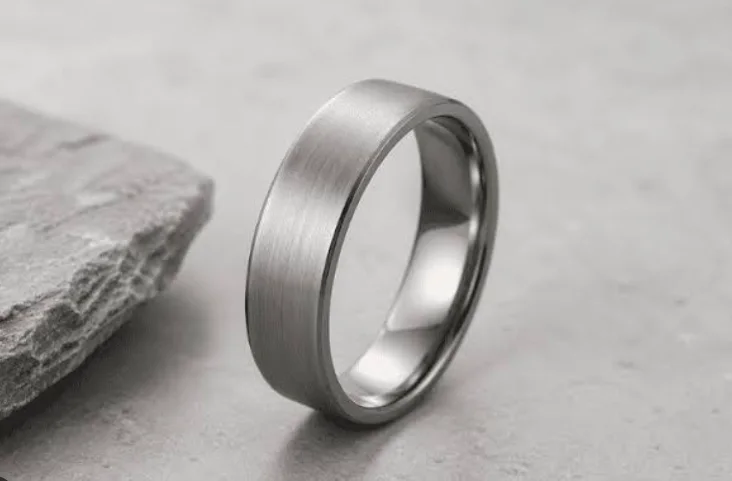
Does titanium tarnish? Generally, no—not in the conventional way that silver, copper, or brass tarnish. Bare titanium rapidly develops a thin, stable titanium oxide film when exposed to oxygen. Instead of producing the dark sulfide films, green patina, or progressive surface degradation associated with many other metals, this passive oxide protects the titanium underneath.
However, saying that titanium “never changes color” would also be incorrect. A titanium surface can become dull, blue, purple, gold, rainbow-colored, spotted, or stained because of heat, oxide-film thickness, anodizing, machining conditions, fingerprints, mineral deposits, foreign-metal contamination, or wear of an applied coating. These appearance changes are not necessarily conventional tarnish—and some are purely cosmetic while others deserve engineering attention.
| What You See on Titanium | Likely Cause | Is It Conventional Tarnish? | Should You Be Concerned? |
|---|---|---|---|
| Normal silver-gray surface | Natural thin TiO₂ passive film | No | Normally no |
| Blue, purple, gold, or rainbow color | Thicker oxide from heat or anodizing | No | Depends on how the oxide formed |
| Dull or cloudy appearance | Oil, soap, minerals, fingerprints, or fine scratches | Usually no | Usually cosmetic |
| Orange or brown spots | Possible transferred or embedded iron contamination | The iron may be rusting, not the titanium | Potentially; investigate the contamination |
| Color worn from anodized titanium | Abrasion changes or removes the controlled oxide thickness | No | Mainly an appearance issue unless the finish is functional |
| Black or gold coating becoming patchy | PVD, plating, or another applied coating wearing | Not necessarily | Depends on coating function |
| Heavy gray scale after high-temperature exposure | Advanced oxidation | No | Yes, especially for engineering parts |
Why Doesn't Titanium Tarnish Like Silver or Copper?
The main reason is titanium's reaction with oxygen. Titanium is actually a highly reactive metal, but that reactivity works in its favor under normal conditions. A freshly exposed titanium surface rapidly forms titanium dioxide. The International Titanium Association describes this oxide as tenacious, hard, continuous, non-porous, transparent, and self-healing.
The oxide isolates most of the underlying metal from its surroundings. This behavior is called passivation.
That is fundamentally different from metals whose surface reaction produces a visible tarnish film. Silver, for example, can develop dark surface compounds, while copper can develop brown or green corrosion products. Titanium's normal passive film is so thin and transparent that untreated titanium generally retains its characteristic gray metallic appearance.
This distinction matters because oxidation does not automatically mean tarnishing. Titanium is oxidized at its surface almost continuously, yet that oxide is the main reason the material remains corrosion resistant. TIMET likewise identifies titanium's tenacious surface oxide as an important corrosion inhibitor.
Is Titanium Discoloration the Same as Tarnish?
No. “Discoloration” describes a visible change, while “tarnish” describes a particular type of surface chemical deterioration. A titanium part can therefore look different without having suffered the conventional tarnishing seen on silver, copper, or brass.
For titanium, appearance changes should be diagnosed by their cause rather than grouped together as tarnish.
Fingerprints, Oil, and Residue Can Make Titanium Look Dull
Machined and polished titanium surfaces can collect fingerprints, machining-fluid residue, soap films, oils, and hard-water minerals. These deposits change how light reflects from the surface and may make the part look darker, hazy, or uneven.
In many cases, the titanium itself has not changed chemically in a meaningful way. Cleaning the residue can restore the original appearance.
This is especially relevant for polished cosmetic CNC components because very small changes in reflectivity are much more noticeable on a smooth finish than on a bead-blasted or coarse as-machined surface.
Scratches Can Change the Appearance Without Causing Tarnish
Titanium is not scratch-proof. Fine scratches alter surface texture and therefore change reflection. A polished titanium surface may gradually become more satin-like, while a directional brushed finish can develop random marks that appear as inconsistent coloration.
The protective oxide is not permanently lost when the titanium is scratched. Freshly exposed titanium rapidly rebuilds a passive oxide in the presence of oxygen.
Therefore, a scratch and a corrosion failure should not automatically be treated as the same problem.
Why Does Titanium Turn Blue, Purple, Gold, or Rainbow Colors?
The most characteristic titanium discoloration comes from changes in oxide-film thickness.
As the transparent titanium oxide becomes thicker, light reflects both from the outer oxide surface and from the titanium beneath it. These reflected waves interfere with one another, causing certain wavelengths to appear more strongly. The result can be gold, purple, blue, green, or other colors without adding conventional pigment.
The International Titanium Association describes titanium anodizing as controlled growth of this oxide layer, with applied voltage controlling oxide thickness and therefore color.
That means a blue titanium surface is not necessarily blue because a blue coating has been painted onto the part.
Heat Can Produce Similar Titanium Colors
Temperature can also thicken titanium's oxide film. Research on titanium alloys has confirmed that thermal exposure can produce visible oxide colors, while the resulting color also depends on factors such as surface pretreatment and oxide thickness.
This explains the gold, purple, blue, and rainbow colors frequently seen around titanium welds, exhaust components, heat-exposed hardware, and locally overheated surfaces.
However, there is an important engineering distinction: heat tint should not always be dismissed as harmless cosmetic coloration.
At elevated temperatures, titanium absorbs more oxygen. The International Titanium Association notes that excessive oxygen exposure during improperly shielded welding can embrittle titanium, while prolonged high-temperature exposure can create an oxygen-rich surface layer and eventually heavier, less protective oxide scale.
Therefore, a decorative anodized blue titanium component and a critical aerospace component that unexpectedly turned blue during processing should not receive the same interpretation.
Can CNC Machining Make Titanium Look Tarnished?
Yes, machining can create a surface appearance that might be mistaken for tarnish, but the mechanism can be very different.
Every cutting pass exposes fresh titanium. Once exposed to oxygen, a new passive oxide begins developing. Under properly controlled machining conditions, this oxide remains extremely thin and the part usually keeps its normal metallic appearance.
But titanium's low thermal conductivity means much of the cutting heat remains concentrated around the cutting edge and workpiece contact zone. If temperatures become sufficiently high, surface oxidation can become visually noticeable.
Cutting Heat Can Produce Colored Oxide on Ti-6Al-4V
A 2024 study of dry cutting on Ti-6Al-4V found that oxide films formed on the cut surface and that nonuniform oxide thickness produced different visible colors through optical interference. Feed conditions influenced oxide composition and color development.
This provides an important explanation for a question that is often oversimplified: if a freshly CNC-machined titanium surface appears blue, purple, bronze, or otherwise discolored, the titanium has not necessarily “tarnished.” The appearance may indicate thermal oxidation created during the cutting process.
For a decorative component, this may mainly be a visual defect. For a precision or safety-critical part, unexpected heat discoloration should trigger a review of cutting conditions and surface requirements rather than simply being polished away without investigation.
Machining Does Not Permanently Remove Titanium's Corrosion Resistance
A common misconception is that machining removes titanium's protective coating and leaves the part vulnerable to tarnish or corrosion.
The oxide is not a conventional factory-applied coating. When machining removes the previous surface, the newly exposed titanium reacts with oxygen and reforms a passive surface. The International Titanium Association specifically describes oxide formation on clean titanium exposed during machining.
This is why an as-machined CNC titanium part does not normally need painting or plating simply to stop ordinary atmospheric tarnish.
Can Iron Contamination Make Titanium Look Rusty or Tarnished?
Yes—and this is much more important for CNC-machined titanium parts than many consumer-oriented explanations of titanium tarnish acknowledge.
A titanium part may leave machining, grinding, blasting, polishing, or handling operations with microscopic iron or steel particles transferred onto its surface. These particles can subsequently corrode and create orange-brown spots.
In that situation, someone inspecting the component may conclude that “the titanium is rusting.” In reality, foreign iron on the titanium may be producing the rust.
ASTM-published research on titanium corrosion found that embedded iron particles can be harmful because they can create local initiation sites for corrosion-related problems.
ASTM B600, the guide for cleaning and descaling titanium and titanium alloy surfaces, likewise addresses removal of shop soils, oxides, scale, and foreign surface contaminants. It specifically notes that titanium blasted with iron-containing media may require subsequent treatment to remove embedded steel particles.
This means an orange spot on a CNC titanium component should not automatically be treated as a cosmetic tarnish stain. For corrosion-critical, medical, marine, aerospace, chemical-processing, or high-cleanliness parts, contamination may need proper investigation and controlled removal.
Does Anodized Titanium Tarnish or Fade?
Anodized titanium does not develop conventional tarnish in the same way as silver or copper. Titanium anodizing deliberately grows the oxide layer to a controlled thickness to create interference color. No conventional colored dye is required for this effect.
However, that does not mean the appearance can never change.
Oil Can Make Anodized Titanium Look Dull
Because anodized titanium color depends on light interacting with an extremely thin oxide film, fingerprints, skin oil, coolant residue, or other surface contamination can alter how the surface reflects light. A bright anodized color may temporarily appear muted or uneven.
Cleaning can restore the appearance when surface residue is the cause.
Abrasion Can Change Anodized Color
The colored oxide is thin. Abrasive polishing or repeated contact can alter its thickness or expose the natural gray titanium underneath. Consumer titanium suppliers therefore commonly distinguish anodized color wear from conventional tarnish.
For CNC components where anodizing is used for identification rather than decoration—for example, instrument components or medical hardware—drawing requirements should identify whether color consistency, masking, contact points, and acceptable color variation matter.
The titanium material guide provides additional information on titanium grades, CNC behavior, and surface-finish options.
What About Black, Gold, or Other Coated Titanium?
Natural titanium is silver-gray. A deep black, gold-tone, rose-gold, or other opaque finish may therefore come from PVD, plating, paint, or another surface system rather than from the natural passive oxide alone.
This distinction is essential when evaluating “tarnish.”
| Titanium Surface | How the Appearance Is Produced | What Can Change | Typical Response |
|---|---|---|---|
| As-machined titanium | Tool-generated surface texture plus natural passive oxide | Tool marks, heat tint, residue, contamination | Inspect machining and cleaning process |
| Polished titanium | Mechanically smoothed surface | Fingerprints, fine scratches, loss of reflectivity | Gentle cleaning or controlled repolishing |
| Bead-blasted titanium | Uniform abrasive texture | Handling marks, inconsistent blasting, embedded contamination | Verify media and blasting process |
| Anodized titanium | Controlled TiO₂ thickness creates interference color | Oil contamination, abrasion, oxide-thickness variation | Clean gently or reprocess if needed |
| PVD-coated titanium | A separate deposited coating | Wear, scratches, coating thinning or delamination | Evaluate coating rather than assuming titanium tarnish |
If a black titanium component develops a silver patch, for example, the most likely question may not be “Why did titanium tarnish?” but rather “Has the black surface coating worn through?”
Does Titanium Tarnish in Water?
Bare titanium generally does not develop traditional tarnish from ordinary water exposure. Its passive oxide is stable in many aqueous environments, which is a major reason titanium is used in chemical-processing, desalination, marine, and other corrosion-sensitive equipment.
Water can nevertheless leave visible deposits. Hard-water minerals, dried droplets, soap, process-fluid residue, or contamination may leave white, gray, or cloudy marks on the surface.
These deposits should not automatically be interpreted as degradation of the titanium itself.
Does Titanium Tarnish in Salt Water?
Under normal seawater exposure, titanium is highly resistant to general corrosion and does not develop the conventional tarnish or rust associated with many other metals. Its passive oxide remains the primary protective mechanism.
However, “does not tarnish in salt water” should not be expanded into the claim that titanium is immune to every corrosive environment. Grade, temperature, crevice conditions, chemical concentration, galvanic coupling, and contamination still matter.
The distinction between tarnish, rust, and actual titanium corrosion is covered in more detail in Can Titanium Rust?.
Does Grade 2 Titanium Tarnish Differently From Grade 5?
Both Grade 2 commercially pure titanium and Grade 5 Ti-6Al-4V naturally develop protective titanium-rich oxide surfaces, so neither should normally be described as a material that tarnishes like silver or copper.
But that does not mean every titanium grade should be expected to behave identically.
Grade 2 and Grade 5 differ significantly in alloy composition, strength, microstructure, machining behavior, and typical application. Oxidation behavior can also depend on alloy composition, temperature, time, and surface condition. Research into titanium heat tinting shows that oxide color can be affected by surface pretreatment and thermal history.
For ordinary room-temperature appearance, this difference may be minor. For elevated-temperature parts, welding, aerospace hardware, chemical exposure, or tightly controlled cosmetic finishes, the exact alloy and processing history should be specified rather than assuming “all titanium looks and oxidizes exactly the same.”
Does Titanium Need a Coating to Prevent Tarnish?
Usually not. Bare titanium's natural passive oxide already gives it strong resistance to ordinary atmospheric tarnish and many forms of corrosion.
Additional finishes are more commonly selected for another reason, such as:
- changing color or appearance;
- creating part identification;
- reducing glare;
- modifying friction;
- improving wear resistance;
- controlling galling;
- providing a specific texture;
- meeting cleanliness requirements.
This is an important manufacturing decision. Tarnish resistance, corrosion resistance, wear resistance, and cosmetic durability are different requirements.
A titanium component can resist corrosion exceptionally well yet still scratch or gall. Adding a coating should therefore solve a defined functional problem rather than simply being specified because the designer assumes uncoated titanium will tarnish.
How Should Discoloration on a CNC Titanium Part Be Evaluated?
Do not start by polishing the part. First identify what produced the appearance change.
| Surface Symptom | Possible Cause | Recommended Engineering Check |
|---|---|---|
| Cloudy or oily surface | Coolant, fingerprints, oil, cleaning residue | Clean a test area using the approved cleaning method |
| Blue/purple area immediately after machining | Cutting heat and thicker oxide film | Review cutting temperature, coolant, tool condition, and surface requirement |
| Blue/purple area near weld | Thermal oxidation / shielding condition | Evaluate against the applicable welding and service requirement |
| Orange-brown spots | Foreign iron contamination | Investigate tooling, blasting media, benches, cleaning, and handling |
| Anodized color appears dull | Oil or residue | Clean gently before assuming finish failure |
| Anodized color permanently changes at contact points | Abrasion altered oxide thickness | Review wear conditions or re-anodizing requirement |
| Black/gold finish exposing gray titanium | Applied coating wear | Inspect coating thickness, adhesion, friction, and service conditions |
| Heavy gray oxide or scale | High-temperature oxidation | Evaluate oxide removal and possible oxygen-enriched surface layer |
ASTM B600 recognizes that titanium processing can leave soils, oxide scale, oxygen-contaminated surfaces, and foreign substances that require different cleaning or descaling approaches. A single universal “titanium tarnish remover” is therefore not an appropriate engineering solution.
Can You Polish Tarnish Off Titanium?
Sometimes polishing improves titanium's appearance, but whether it is appropriate depends entirely on what the visible mark actually is.
If the issue is minor scratching on bare polished titanium, controlled polishing may restore the finish. If the apparent discoloration is only oil or mineral residue, cleaning is usually more appropriate than removing material.
But polishing an anodized titanium component can alter or remove the oxide thickness responsible for its color. Polishing also should not be used blindly on a suspected heat-affected, contaminated, dimension-critical, or coated part.
For precision CNC parts, any refinishing operation should consider:
- dimensional tolerance;
- surface roughness;
- edge geometry;
- anodized or coated surfaces;
- material-removal allowance;
- cleanliness requirements;
- cosmetic acceptance criteria.
Removing a visible stain is not useful if the corrective process pushes a sealing surface, precision diameter, or cosmetic texture outside specification.
How Can Tarnish-Like Discoloration Be Prevented on CNC Titanium Parts?
The best approach is not to treat every appearance change as the same problem.
Control Cutting Heat
Use suitable tooling, stable engagement, effective coolant delivery, and appropriate cutting conditions. Because titanium retains significant heat near the cutting zone, thermal control helps protect tool life and surface integrity.
Prevent Cross-Contamination
Avoid uncontrolled transfer of steel or iron from abrasive media, brushes, work surfaces, grinding operations, and handling equipment where cleanliness is important. ASTM guidance specifically recognizes removal of foreign contamination as part of titanium surface preparation.
Define the Cosmetic Surface Before Quotation
If color consistency or appearance matters, identify cosmetic faces on the drawing or RFQ. “As machined” does not mean every supplier will produce identical reflectivity, tool-path direction, or visual texture.
Specify the Final Finish
State whether the part should remain as-machined, polished, bead blasted, anodized, cleaned, or coated. If anodized color is required, establish acceptable appearance under defined lighting rather than relying only on a rendering displayed on a monitor.
Inspect Before Aggressive Rework
Unexpected blue oxide, rust-colored spots, or coating wear can provide evidence about machining heat, contamination, or process failure. Document and diagnose the condition before polishing away that evidence.
How RapidMFGPro Helps With Titanium CNC Machining and Surface Requirements
A titanium supplier should not be evaluated only by whether its equipment can physically cut titanium. When surface appearance, cleanliness, anodized color, contamination control, or heat-sensitive features matter, the complete manufacturing process becomes important.
RapidMFGPro can help buyers identify manufacturers with relevant titanium machining experience and compare suppliers according to material grade, CNC milling or turning requirements, geometry, tolerance, surface finish, inspection, industry requirements, and production volume.
Supplier evaluation can also consider practical questions such as whether the manufacturer routinely controls titanium machining heat, whether steel contamination is managed when required, whether the correct finishing partner is used, and whether cosmetic or corrosion-critical surfaces can be inspected consistently.
A shop experienced mainly in ordinary aluminum or mild-steel components does not automatically have the same process experience needed for Ti-6Al-4V aerospace parts, clean titanium fluid components, or color-controlled anodized titanium.
RapidMFGPro can match medium-high-precision and more demanding precision projects with manufacturers suited to the actual requirement. Supplier matching is typically completed within 1–2 days. Buyers can then communicate directly with the matched manufacturer regarding drawings, surface requirements, quotations, inspection, and production details.
If a matched supplier does not meet expectations, buyers can provide feedback so its capabilities and performance can be reviewed and another suitable option considered.
Conclusion
Titanium does not normally tarnish like silver, copper, or brass because its natural titanium oxide film protects the metal instead of creating a conventional degrading tarnish layer. But titanium can still change appearance. Fingerprints, mineral deposits, scratches, anodized oxide wear, applied coatings, machining heat, welding heat, high-temperature oxidation, and foreign iron contamination can all produce discoloration.
For CNC titanium parts, the important question is therefore not simply “Did the titanium tarnish?” but “What caused this surface change?” A dull fingerprint, blue machining oxide, worn anodized finish, and rusting embedded steel particle require completely different responses. Correct diagnosis protects both the appearance and the engineering performance of the finished component.
Frequently Asked Questions
Does Titanium Turn Green?
Bare titanium does not normally develop the green patina associated with copper. Green titanium can be produced intentionally through controlled surface coloration such as anodizing, but that should not be confused with natural tarnish.
Does Titanium Turn Black Over Time?
Bare titanium does not normally turn black through ordinary atmospheric tarnishing. A dark surface may result from contamination, deposits, high-temperature oxidation, or an intentionally applied black coating. The surface system should be identified before diagnosing the change.
Does Titanium Tarnish When Wet?
Ordinary water does not normally cause bare titanium to develop conventional tarnish. However, dried minerals, soap, process fluids, or other residues may make the surface look cloudy or spotted even when the titanium beneath remains intact.
Does Anodized Titanium Tarnish?
Anodized titanium does not conventionally tarnish. Its color comes from a controlled oxide-film thickness and optical interference. Oil can temporarily change its appearance, while abrasion can alter the oxide thickness and permanently change the visible color.
Why Is My Titanium Turning Blue?
A blue titanium surface commonly indicates a thicker oxide film produced by heat or intentional anodizing. On a newly CNC-machined part, cutting temperature can also contribute to colored oxide formation. Blue coloration is therefore not automatically evidence of tarnish, although unexpected heat tint on a critical part should be investigated.
Need Help Reviewing a Custom Part?
Share your CAD file and requirements to request supplier matching. Supplier capability and commercial terms must be verified before order placement.
Request Supplier Match