Time to read: 5 min
Low-Volume vs Mass Production: Which Production Strategy Is Better for CNC Parts?
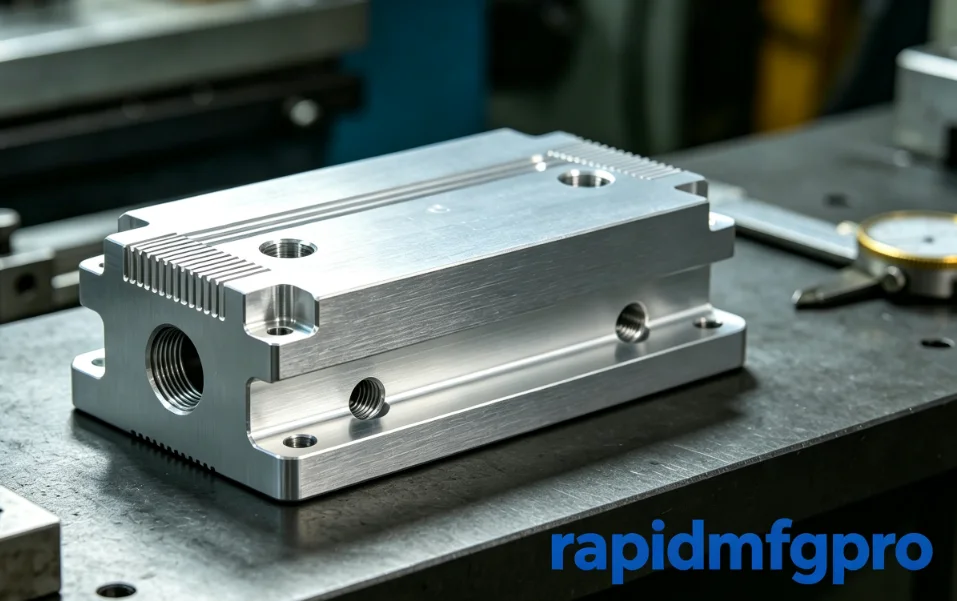
Low-volume production is generally the better choice when demand is uncertain, the design may still change, or dedicated tooling cannot yet justify its cost. Mass production becomes more attractive when demand is stable, the design is mature, and investments in fixtures, automation, tooling, or a different manufacturing process can reliably reduce recurring costs.
However, there is no universal quantity threshold that automatically converts a project from low-volume to mass production. A 10,000-part requirement may represent mass production for a custom component but high-mix, low-volume (HMLV) manufacturing for another. The optimal path depends on quantity per SKU, demand predictability, manufacturing process, design maturity, tooling investment, and total commercial risk.
| Factor | Low-Volume Production | Mass Production |
|---|---|---|
| Main Objective | Operational flexibility and limited risk exposure | Throughput, repeatability, and minimal unit cost |
| Upfront Investment | Low (standard tooling, minimal custom fixtures) | High (dedicated dies, molds, automated cells) |
| Unit Recurring Cost | Higher (higher setup-to-part ratio) | Lower (amortized setup and optimized cycle time) |
| Design Change Impact | Low cost / quick lead time | Extremely high cost after tooling validation |
| Tooling Strategy | Standard vises, soft jaws, modular plates | Dedicated multi-cavity fixtures, hydraulic clamps, molds |
| Demand Uncertainty | High tolerance | Creates high inventory and write-off risk |
| Product Variety | Ideal for high-mix SKUs and frequent revisions | Best suited to frozen, high-volume single configurations |
| Best Application | Prototypes, bridge runs, custom equipment, pilot launches | Mature consumer products, automotive, high-volume hardware |
What Is the Core Difference Between Low-Volume and Mass Production?
The fundamental distinction is not the sheer volume shipped—it is what the manufacturing system is optimized to deliver.
- Low-volume production prioritizes system adaptability. Manufacturers minimize non-recurring engineering (NRE) costs, customized tooling, and dedicated automation. CNC programs, standard bar stock, modular workholding, and general-purpose equipment allow design iterations without discarding heavy capital investments.
- Mass production prioritizes repeatability and unit-cost reduction. Once geometry and demand stabilize, dedicated fixtures, automated loading/unloading, optimized tooling paths, and near-net-shape blanks minimize the recurring cost of every acceptable unit.
Defining production scale solely by numerical volume is misleading. A requirement of 2,000 injection-molded plastic housings carries vastly different economic parameters than 2,000 five-axis machined titanium structural fittings. Cycle times, raw material costs, tool wear rates, and amortization timelines shift the economic crossover point entirely.
For a deeper dive into short-run manufacturing strategies, reference RapidMFGPro’s low-volume manufacturing guide.
Does High Annual Quantity Always Warrant Mass Production?
No. Total aggregate volume frequently obscures a critical metric: quantity per specific part number (SKU).
Consider a company procuring 20,000 machined components annually:
- Scenario A (Single SKU): 20,000 units of one identical, frozen design. Dedicated multi-part fixtures, bar feeders, and cell automation are fully economically justified.
- Scenario B (High-Mix/Low-Volume): 20,000 units distributed across 100 distinct part numbers (an average of 200 parts per design). Frequent machine tear-downs, setup adjustments, distinct tooling packages, and independent inspection runs retain the economics of low-volume production.
Note: Economies of Scale ∝ Repetition per Setup (Not Aggregate Factory Output)
When evaluating your procurement strategy, analyze these key variables:
- What is the required lot size per part release?
- Do multiple part variants share raw material profiles, clamping locations, or machine setups?
- What is the statistical probability of an engineering change notice (ECN) in the next 12 months?
How Should You Quantitatively Compare Production Costs?
Relying solely on quoted unit price leads to flawed sourcing decisions. Production economics should be modeled through fixed and variable cost structures:
Total Cost = Fixed Investment (F) + [Quantity (Q) × Unit Recurring Cost (C)]
Calculated Break-Even Point
Comparing a low-volume flexible process (FL, CL) against a dedicated mass-production route (FM, CM) yields the theoretical crossover quantity (Qbreak-even):
Qbreak-even = (FM - FL) ÷ (CL - CM)
Example: A flexible CNC setup requires FL = $0 in dedicated tooling with a unit cost CL = $30. An automated production cell requires FM = $30,000 in custom fixturing and programming, reducing unit cost to CM = $20.
Qbreak-even = (30,000 - 0) ÷ (30 - 20) = 3,000 units
Why Theoretical Crossover Points Fail in Practice
Mathematical break-even models assume static conditions. In real-world supply chains, the calculation often fails to capture:
- Material Minimum Order Quantities (MOQs): Custom alloys or extrusions requiring higher minimum purchases than active demand dictates.
- Capital Tied Up in Tooling: Opportunity cost of upfront capital allocation.
- Design Obsolescence Risk: Scrapping finished inventory or tooling due to unexpected revision cycles.
- Quality Qualification Expenses: First Article Inspection (FAI), PPAP, and CMM programming costs for dedicated lines.
Why Does CNC Unit Cost Drop Rapidly As Volume Increases?
The sharp cost reduction between prototype quantities (1–10 pcs) and small production batches (100–500 pcs) is primarily driven by fixed-cost amortization, not faster metal removal.
A standard CNC quotation bundles significant upfront operational setup:
- CAM programming and tool-path optimization
- Fixture assembly and machine setup
- Tool presetting and probing offset calibration
- First-piece inspection and CMM validation
Effective Unit Cost = Machining Cost + [(Setup & NRE Costs) ÷ Order Quantity (Q)]
If initial setup costs total $1,000:
- At 10 parts, fixed setup adds $100/part.
- At 500 parts, fixed setup adds only $2/part.
Once order volume amortizes fixed setup costs to a negligible percentage, further cost reductions require physical cycle-time optimization: multi-part clamping, high-feed tooling, automated loading, or transitioning to near-net-shape raw materials.
When Does Dedicated CNC Fixturing Become Justified?
Workholding strategy marks a primary operational divider between low-volume and high-volume machining.
- Low-Volume Workholding: Standard Vise / Soft Jaws / Modular Grid Plates
- Mass-Production Workholding: Dedicated Tombstone / Hydraulic & Pneumatic Clamping / Robotic Automation
To evaluate dedicated workholding investment, calculate the payback threshold:
Fixture Payback Quantity = Total Fixture Investment ÷ Labor & Cycle Savings Per Part
If a custom $6,000 hydraulic tombstone fixture reduces loading and machining cost by $4 per part, its simple payback point is 1,500 parts. If expected demand exceeds 1,500 units before an engineering change renders the fixture obsolete, the investment is economically sound.
Comparing Process Escalation Paths
Scaling volume does not always mean running the same machine faster. The most effective cost-reduction strategy often involves transitioning to a different primary manufacturing process.
| Current Process | Scaled Alternative | Primary Economic / Technical Driver |
|---|---|---|
| CNC Machining (Billet) | Extrusion + CNC Finish Machining | Eliminates bulk material removal on uniform cross-sections |
| CNC Machining (Billet) | Investment/Die Casting + Finish CNC | Achieves near-net shape for complex internal geometry |
| CNC Machining (Plastics) | Injection Molding | Drastically reduces cycle time from minutes to seconds |
| Laser Cutting + Press Brake | Progressive Die Stamping | Replaces sequential cutting/bending with single-stroke stamping |
| Additive Manufacturing (3D) | CNC Machining or Molding | Improves surface finish, material integrity, and throughput rate |
Note: Process transitions introduce tradeoffs. Castings and extrusions introduce porosity concerns, draft angle requirements, and secondary machining setups. Always evaluate:
Total Process Impact = Finished Part Cost + Tooling Amortization + Quality/Yield Risk
How Part Design (DFM) Must Adapt to Production Strategy
Part geometry directly dictates whether a design can smoothly scale into mass production.
Designing for Low-Volume Production (DFM Focus)
- Maximize Standard Features: Use standard thread sizes, uniform internal corner radii (R ≥ ⅓ × pocket depth), and stock material dimensions.
- Minimize Setups: Design features to be accessible from 1–2 orientations to eliminate complex multi-axis setups or soft jaws.
Designing for Mass Production (DFM Focus)
- Optimize for Near-Net Shapes: Incorporate draft angles (1° - 3°) for casting/molding feasibility.
- Feature Standardization for Automation: Add robotic gripper landing zones, poka-yoke (fool-proof) locating points, and uniform clamping surfaces.
- Tight Tolerance Isolation: Restrict tight tolerance callouts (≤ ±0.01 mm) exclusively to critical functional interfaces to avoid unnecessary precision grinding or finishing operations.
For specific design guidelines, refer to RapidMFGPro's article on reducing CNC machining costs through better part design.
Key Decision Framework: Low-Volume vs. Mass Production
Use this checklist to evaluate whether your current program should remain low-volume or transition to mass production:
- Demand Predictability: Are purchase orders bound by long-term blanket contracts, or based on spot forecasts?
- Uncertain / Irregular → Stay Low-Volume
- Stable / Scheduled Releases → Move to Mass Production
- Design Stability: Is the engineering revision level frozen?
- ECNs expected within 6 months → Stay Low-Volume
- Design validated & locked → Move to Mass Production
- Tooling Amortization: Does verified demand comfortably recover tooling investment (FM)?
- Payback relies on aggressive sales growth → Stay Low-Volume
- Payback covered by firm backlog → Move to Mass Production
- Inventory Exposure: What is the cost penalty if finished parts become obsolete?
- High holding cost / short product lifecycle → Stay Low-Volume
- Low decay risk / long product lifecycle → Move to Mass Production
What Information to Request from Suppliers When Quoting
When sourcing components, avoid requesting single-quantity quotes. To analyze the cost curve accurately, request:
- Stepped Pricing Tier Analysis: Request quotes at 50, 250, 1,000, 5,000, and 10,000 units.
- Itemized Non-Recurring Engineering (NRE): Require suppliers to break out setup, custom fixturing, programming, and gauge costs separately from the unit price.
- Process Roadmap: Ask suppliers at what quantity threshold they would recommend changing raw material forms (e.g., bar stock vs. forging) or workholding strategies.
For a detailed evaluation guide, review RapidMFGPro's resource on comparing CNC machining quotes beyond unit price.
How RapidMFGPro Supports Production Transitions
Transitioning a part from low-volume prototyping to high-volume manufacturing often requires shifting supplier profiles. A machine shop optimized for quick-turn prototype agility may lack the pallet systems, automated inspection, or capacity required for monthly high-volume releases.
RapidMFGPro matches CNC and custom manufacturing projects with verified facilities based on specific production criteria:
- For Low-Volume Programs: Matching prioritizes rapid engineering response, versatile multi-axis machining capacity, revision adaptability, and low setup overhead.
- For High-Volume Programs: Matching evaluates automated cell capability, dedicated fixture design expertise, statistical process control (SPC) quality infrastructure, and long-term capacity reservation.
Frequently Asked Questions
What exact quantity defines low-volume manufacturing?
There is no fixed industry number. Low volume can mean 10 parts in aerospace or 5,000 parts in high-volume consumer electronics. It is defined by manufacturing economics—specifically, using flexible processes rather than dedicated hard tooling.
Can CNC machining be used for mass production?
Yes. Mass production is an operational strategy, not a technology limit. High-volume CNC machining utilizes horizontal tombstone machining centers, bar feeders, robotic load/unload systems, in-process probe checking, and sister tooling to achieve high continuous output.
Should I always switch processes once I cross the break-even point?
No. Switching processes introduces qualification time, new tooling lead times, supplier transition risk, and material property shifts (e.g., wrought vs. cast mechanical strength). Transition only when aggregate risk, lead time, and capital metrics align alongside unit cost savings.