Time to read: 5 min
What Is the Strongest Metal? A Practical Guide for Your Part Project
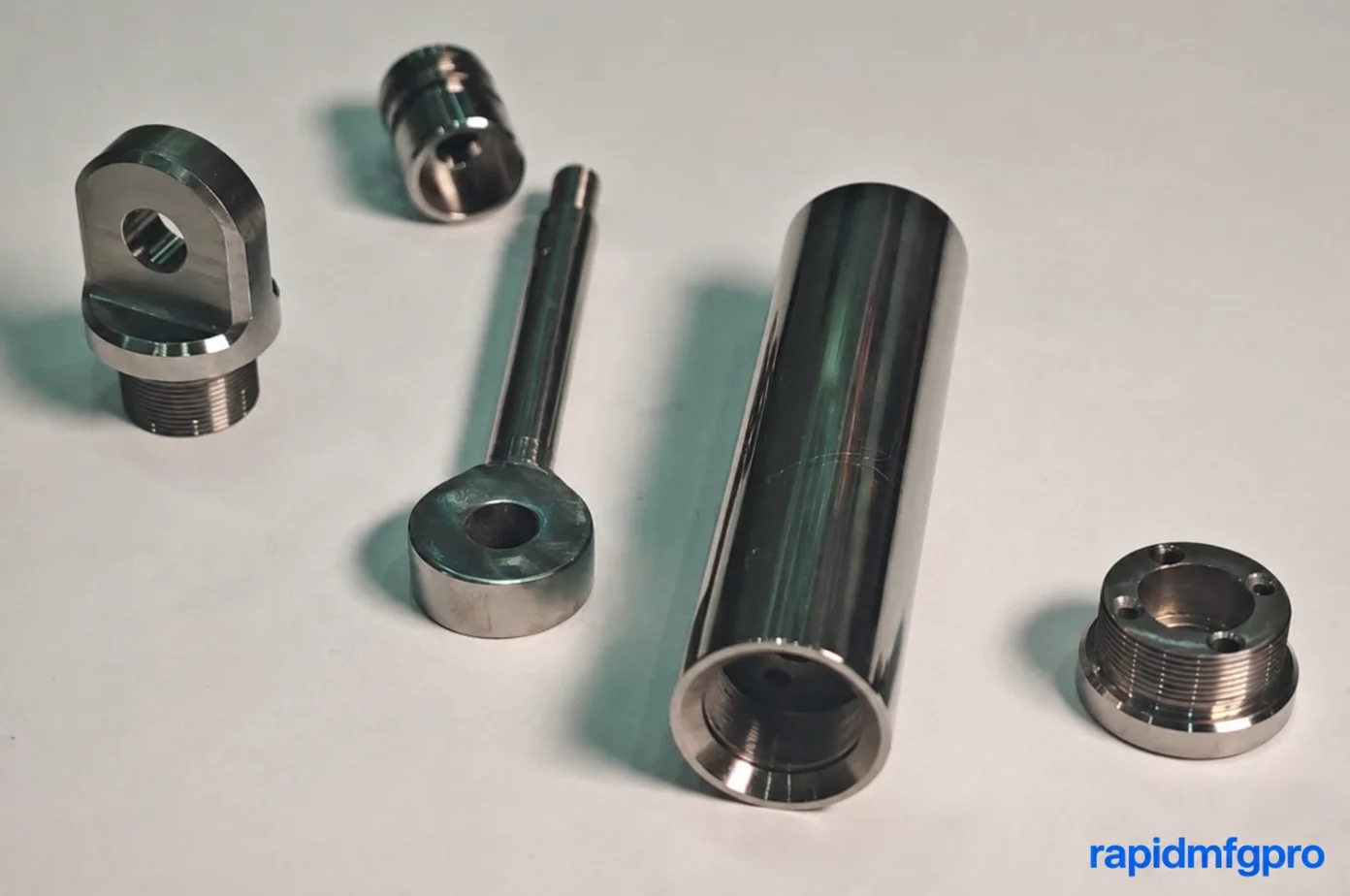
What is the strongest metal? There is no single metal that wins every definition of strength. Tungsten is commonly cited when discussing the tensile strength of pure metals and is exceptional at high temperature, while ultra-high-strength steels such as maraging steel can exceed many pure metals in yield and tensile strength. Titanium alloys stand out when strength is compared with weight, and nickel-based superalloys become more attractive when strength must be retained at elevated temperatures.
For an engineering or CNC machining project, the useful question is therefore not simply “What is the strongest metal on Earth?” It is: strongest against what type of failure, under what environment, and at what manufacturing cost? Hardness, yield strength, tensile strength, stiffness, toughness, fatigue resistance, temperature, corrosion, geometry, heat treatment, and machinability can all change the correct material choice.
| Material | Where It Stands Out | Main Limitation | Typical CNC Decision |
|---|---|---|---|
| Tungsten | Very high strength at temperature, extreme melting point, high stiffness and density | Brittleness, weight, specialized processing | Usually selected only when its unusual thermal or density properties are actually required |
| Maraging steel | Extremely high yield strength with useful toughness after aging | Higher material and heat-treatment cost than ordinary steels | Strong option for highly loaded precision parts where absolute strength matters |
| Ti-6Al-4V | High strength-to-weight ratio and corrosion resistance | Difficult machining behavior and lower stiffness than steel | Often favored when reducing component mass justifies higher finished-part cost |
| Inconel 718 | Strength retention at elevated temperature plus oxidation and corrosion resistance | Work hardening, heat generation and high machining cost | Useful when ordinary steels lose performance because of heat or environment |
| Hardened / tool steel | High hardness, wear resistance and high achievable strength | Machining becomes more demanding as hardness increases | Often appropriate for dies, tooling, wear parts and heavily loaded mechanical components |
| Chromium | Very high hardness | Brittle and rarely used as a bulk structural material | More relevant as an alloying or surface material than as a machined structural part |
Which Metal Is Actually the Strongest?
If “strongest” means the metal that can withstand the greatest tensile stress before fracture, tungsten is frequently given as the answer for a pure metal. However, tungsten properties vary considerably with purity, processing route, grain structure, degree of working, recrystallization state, temperature and product form. This is why assigning one universal tensile-strength number to “tungsten” can be misleading. Plansee, for example, provides different tensile behavior according to material condition rather than treating tungsten as having one fixed strength.
If alloys are included, the answer changes. Engineered steels can achieve extremely high strength through alloy chemistry and heat treatment. Carpenter Technology reports that its NiMark 300 maraging steel can exceed approximately 1,860 MPa yield strength after aging. That alone shows why “tungsten is the strongest metal” is too broad when high-performance alloys are allowed in the comparison.
And even this does not create a universal winner. A part that survives a static tensile test may still perform poorly under impact, cyclic loading, corrosion, high temperature or abrasive wear. The strongest material on a datasheet is not automatically the strongest finished component.
What Does “Strongest Metal” Mean in Engineering?
One reason strongest-metal rankings contradict each other is that several different mechanical properties are repeatedly grouped under the word “strength.” Search results commonly compare tensile, yield, compressive and impact behavior, while hardness and strength-to-weight ratio are also frequently included.
| Property | What It Really Tells You | Common Mistake |
|---|---|---|
| Tensile strength | Maximum tensile stress reached during a tensile test before fracture | Assuming the highest UTS means the best material for every load case |
| Yield strength | Stress at which significant permanent deformation begins | Ignoring yield because the material has a high ultimate tensile strength |
| Hardness | Resistance to localized indentation, scratching or surface deformation, depending on test method | Treating hardness as the same property as tensile or compressive strength |
| Toughness | Ability to absorb energy before fracture | Assuming a harder metal is automatically tougher |
| Stiffness | Resistance to elastic deformation, commonly related to Young's modulus | Assuming higher strength means a part will deflect less |
| Fatigue resistance | Resistance to failure under repeated loading | Selecting material only from a static tensile-strength value |
| Specific strength | Strength relative to density | Comparing titanium and steel only by absolute strength |
Is Tensile Strength the Best Way to Rank Metals?
Not necessarily. Tensile strength is useful when a component is exposed to pulling loads or when engineers need a standardized comparison of material behavior. But many precision parts are designed to remain below yield, not to operate close to ultimate fracture.
For a shaft, pin, bracket or structural CNC component, yield strength may therefore be more useful than ultimate tensile strength. If permanent bending, distortion or dimensional change makes the component unusable, the part has effectively failed long before it physically breaks.
Is Hardness the Same as Strength?
No. Chromium is frequently described as one of the strongest metals because it has very high hardness, while tungsten carbide is commonly included in strongest-material lists because of its exceptional wear resistance. But hardness describes resistance to localized deformation or scratching; it does not directly rank tensile strength, toughness or resistance to fracture. Chromium itself is relatively brittle and is more commonly useful as an alloying element or coating than as a bulk load-bearing CNC material.
This distinction also corrects a common technical error: Mohs hardness is not a test of compressive strength. The Mohs scale compares scratch resistance. Compressive behavior must be evaluated using an appropriate mechanical test and, for ductile metals, engineers frequently focus on compressive yield behavior rather than searching for a single “compressive strength” value.
Is Strength the Same as Stiffness?
No. Strength determines how much stress a material can tolerate before yielding or failing, while stiffness determines how much it elastically deforms under load. A material can be very strong but comparatively flexible.
This matters in machining and part design. Ti-6Al-4V, for example, provides excellent strength at a relatively low density, but its elastic modulus is substantially below that of typical steels. A thin titanium wall or long titanium shaft can therefore deflect more under the same machining or service load even when its allowable strength is high.
Is Tungsten the Strongest Metal in the World?
Tungsten deserves a place among the strongest metals, but calling it the universal strongest metal leaves out important engineering context. It has the highest melting point of any metal and retains useful mechanical properties in extreme-temperature environments. Its density is also extremely high, approximately 19.25 g/cm³ according to Plansee.
Its weakness is not low strength but practical structural behavior. Tungsten can be brittle, particularly depending on temperature, microstructure and condition. A highly loaded component that needs to tolerate impact, bending, assembly shock or crack propagation may therefore benefit more from a tougher alloy than from tungsten's impressive intrinsic properties.
Tungsten is also heavy. Replacing a titanium component with the same volume of tungsten dramatically increases mass. That makes a simple tensile-strength ranking almost meaningless for applications such as aircraft, robotics or moving mechanisms where inertia and weight matter.
Are Steel Alloys Stronger Than Tungsten?
Some high-strength steel alloys can exceed commonly reported bulk tungsten values in tensile or yield strength. Maraging steels are especially important because their strength comes primarily from precipitation hardening rather than relying on very high carbon content. Grade, aging treatment and condition strongly influence the final mechanical properties.
This is one reason steel remains extremely important when engineers need high absolute strength. Steel also offers a huge range of compositions and heat-treatment conditions. Comparing “steel” with tungsten or titanium as though steel were one fixed material ignores the difference between mild steel, 4140, 4340, tool steel and ultra-high-strength maraging grades.
For CNC parts, a designer should specify the actual alloy and condition rather than simply writing “high-strength steel.” If you are evaluating steel grades for machined parts, RapidMFGPro's guide to choosing steel materials for CNC components provides a more useful breakdown of carbon, alloy and tool steels.
Is Titanium the Strongest Metal?
Titanium is not generally the strongest metal by absolute tensile or yield strength. Its major advantage is specific strength: high strength combined with much lower density than steel or tungsten.
Ti-6Al-4V is the most familiar example. Published material data for annealed Grade 5 titanium commonly place its ultimate tensile strength around the 900–1,000 MPa range, although the exact value changes with specification, product form and heat treatment. Its density is approximately 4.43 g/cm³.
That combination allows designers to reduce mass without moving to a weak material. It explains why titanium is so important in weight-sensitive aerospace, medical and high-performance mechanical applications. However, a high-strength steel may still have greater absolute yield or tensile strength.
For a more direct grade-sensitive comparison, see titanium vs. steel for strength, weight and CNC machining.
What About Inconel and Other Nickel-Based Superalloys?
Nickel-based superalloys become serious candidates when “strongest” includes performance at elevated temperature. Inconel 718, for example, is precipitation hardenable and was developed to provide high tensile, yield, creep and creep-rupture performance while operating at temperatures where many conventional materials lose substantial capability.
This highlights another misconception: the metal with the highest melting point is not automatically the metal with the highest usable service temperature for a particular component. Melting point only identifies the solid-to-liquid transition. Real parts can become unsuitable much earlier because of loss of yield strength, creep, oxidation, microstructural change or dimensional instability.
If a component carries load inside an engine, turbine, hot process system or other elevated-temperature environment, room-temperature tensile rankings are therefore insufficient.
Is Tungsten Carbide the Strongest Metal?
Tungsten carbide is frequently placed on lists of the world's strongest metals, but technically it should not be treated as a pure metal. Most engineering cutting grades are cemented carbides consisting primarily of hard tungsten-carbide particles held in a metallic binder such as cobalt.
The distinction matters because tungsten carbide achieves extremely high hardness and wear resistance but behaves very differently from ductile structural metals. It can tolerate severe contact and abrasive conditions yet remains susceptible to brittle fracture under unfavorable shock or tensile loading.
This is why tungsten carbide is excellent for cutting inserts, wear components and tooling, while it would be an inappropriate substitute for steel or titanium in many impact-loaded structural parts. Competitor strongest-metal lists often mention tungsten carbide without clearly explaining this materials-class difference.
Is Chromium the Hardest Metal?
Chromium is commonly identified as one of the hardest elemental metals, and this is why it appears repeatedly in strongest-metal rankings. Its practical value, however, is more closely associated with hardness, corrosion behavior and alloying than with use as a large structural component.
This is another example of why “hardest metal” and “strongest metal” should not be treated as interchangeable questions. A material can resist scratching extremely well and still have poor resistance to crack propagation or impact.
Does Heat Treatment Change Which Metal Is Strongest?
Yes, dramatically. For many engineering alloys, material condition is as important as alloy name.
Maraging steel develops its exceptional strength after aging. Alloy steels can be quenched and tempered to different strength and toughness levels. Tool steels can be hardened and tempered for different balances of hardness, wear resistance and fracture resistance. Ti-6Al-4V can also have different properties depending on processing and heat-treatment condition.
As a result, a statement such as “4340 is stronger than titanium” is incomplete unless the material condition is known. A designer comparing materials should review the specification, heat treatment, minimum guaranteed properties, section size and product form rather than selecting from a generic internet strength table.
Does the Strongest Metal Make the Strongest Part?
No. Material strength is only one input into component strength.
A part can fail even when manufactured from an extremely strong alloy because of an undersized cross-section, sharp internal corner, thread root, keyway, surface defect, unfavorable grain flow, fatigue concentration, excessive temperature, corrosion, poor heat treatment or incorrect assembly load.
Geometry is particularly important. Increasing section thickness or improving load paths can sometimes create a stronger and cheaper component than switching to an exotic material. Likewise, replacing a ductile steel with a harder but more brittle material may actually reduce reliability under impact.
For this reason, material datasheet values should not be used as direct predictions of finished-part load capacity. The actual design must consider stress distribution, safety factor, fatigue, environment and manufacturing condition.
Which Strong Metals Are Best for CNC Machining?
The strongest alloy is rarely the easiest or least expensive material to machine. More importantly, high strength alone does not determine machinability. Thermal conductivity, hardness, work hardening, chemical affinity, ductility, elastic modulus and microstructure all influence cutting behavior.
Machining High-Strength Steel
Many alloy steels can be machined efficiently before final hardening. As hardness increases, cutting forces and tool wear usually become more demanding, and very hard conditions may require specialized carbide tooling, hard turning, grinding or other finishing routes.
For maraging steel, process sequencing can be especially important. Machining in a lower-strength condition and aging afterward may improve material removal efficiency, but heat treatment can introduce dimensional changes that must be considered when critical tolerances are involved. Alternatively, final machining or grinding may be required after treatment.
Machining Titanium Alloys
Titanium demonstrates why strength does not directly predict machinability. Ti-6Al-4V has relatively low thermal conductivity, so a large portion of cutting heat remains concentrated near the tool-workpiece interface. Its lower elastic modulus can also contribute to deflection and elastic recovery in thin or slender features. Tool engagement, rigidity, coolant delivery and stable cutting parameters therefore become important.
A titanium supplier must understand these behaviors rather than treating the job like ordinary aluminum or mild-steel machining.
Machining Inconel 718
Inconel 718 is intentionally designed to retain strength under difficult conditions—and that property does not disappear just because a cutting tool is trying to remove it. The alloy can work harden, generate substantial heat at the cutting zone and accelerate cutting-edge wear. Conservative process parameters and rigid setups can increase machining time compared with many conventional steels or aluminum alloys.
Machining Tungsten
Pure tungsten presents a different manufacturing problem. Its brittleness, high density and processing history make it a specialized machining material rather than a normal substitute for steel. Depending on part requirements and material condition, manufacturers may rely on appropriate cutting, grinding, EDM or powder-metallurgy-related routes rather than treating tungsten as an ordinary machinable billet.
Does a Stronger Metal Hold Tighter CNC Tolerances?
Not automatically. This is an important distinction when selecting materials for precision parts.
A higher yield strength can help a part resist permanent deformation, but CNC tolerance capability depends on the complete manufacturing system: machine accuracy, part geometry, workholding, stiffness, cutting force, tool deflection, temperature, residual stress, tool wear, finishing sequence and inspection conditions.
Stiffness can sometimes matter more than tensile strength while the part is being cut. A long, thin component with low bending stiffness may deflect away from the cutter even though its material has excellent strength.
Heat treatment creates another issue. If a high-strength steel is machined and subsequently hardened or aged, dimensional movement may require finishing allowance and post-treatment grinding or machining. Therefore, stronger does not mean more precise.
Does the Strongest Metal Cost More to CNC Machine?
Often, but not simply because its raw stock costs more. The relevant number for a buyer is finished CNC part cost.
That cost can include material stock, cutting speed, tool life, number of setups, coolant requirements, heat treatment, grinding, inspection, scrap risk and finishing. A titanium blank may be more expensive than a steel blank, but the machining-time difference can further widen the finished-cost gap. Inconel can create an even larger processing premium when slow material removal and frequent tool changes are required.
On the other hand, paying more for a high-performance alloy can reduce total system cost if it enables a lighter component, longer service life or operation in an environment where cheaper materials would fail.
Which Strong Metal Should You Choose for a CNC Part?
| If Your Main Requirement Is... | Materials Often Worth Evaluating | Why |
|---|---|---|
| Maximum absolute yield strength | Maraging steel, ultra-high-strength alloy steel | Very high achievable strength through controlled alloying and heat treatment |
| Low weight plus high strength | Ti-6Al-4V and other titanium alloys | Excellent specific strength |
| High-temperature load carrying | Inconel 718 and other nickel superalloys | Designed to retain useful strength under elevated-temperature conditions |
| Extreme hardness and wear resistance | Tool steel, hardened steel, cemented tungsten carbide | Better suited to abrasive contact and tooling applications |
| Extreme temperature plus high density | Tungsten and tungsten alloys | Exceptional melting point, density and elevated-temperature properties |
| High strength at reasonable manufacturing cost | Appropriate alloy steel such as 4140 or 4340 | Often provides a practical balance of properties, availability and machinability |
| Corrosion resistance plus low weight | Titanium alloys | Combines useful mechanical strength with strong environmental resistance |
The important point is that the specification should begin with the component's failure mode. If the concern is permanent bending, compare yield strength. If mass is constrained, compare specific strength. For repeated loading, fatigue becomes critical. For cutting surfaces, hardness and wear matter. For hot environments, compare temperature-dependent properties rather than room-temperature UTS.
How RapidMFGPro Helps With High-Strength Metal CNC Machining
Selecting a high-strength material is only useful if the supplier can manufacture it correctly. A machine shop experienced with 6061 aluminum or mild steel does not automatically have the tooling, process control or experience required for Ti-6Al-4V, hardened tool steel, maraging steel or Inconel 718.
RapidMFGPro is an independent manufacturing resource and supplier-matching platform rather than a claim that every project is produced in one factory. For high-strength metal projects, the matching process can consider the actual alloy and heat-treatment condition together with part geometry, tolerance, inspection requirements, quantity and application. RapidMFGPro's current CNC capability covers supplier matching for milling, turning and related manufacturing requirements.
- For titanium parts, supplier experience with heat control, tool wear and stable workholding can be reviewed.
- For high-strength and hardened steels, the machining and heat-treatment sequence can be considered before supplier selection.
- For nickel superalloys, suppliers can be evaluated for experience with demanding cutting conditions and inspection requirements.
- For tight-tolerance parts, matching can consider equipment, part geometry, inspection capability and process control instead of assuming that material strength guarantees precision.
- For prototypes and production orders, suppliers can be matched according to quantity, required process and manufacturing capability rather than material name alone.
Projects involving milled brackets, housings, plates or complex multi-face components can be reviewed through RapidMFGPro's CNC machining supplier matching process. Matching is typically completed within 1–2 days, after which buyers can communicate directly with the selected manufacturer. If supplier performance does not meet expectations, the project can be reviewed again and another supplier considered.
FAQs About the Strongest Metals
What is the strongest natural metal?
Tungsten is commonly cited as one of the strongest pure naturally occurring metals when tensile strength and high-temperature capability are emphasized. However, its mechanical properties depend heavily on processing and condition, and engineered alloys can exceed it in some strength measurements.
What is stronger than tungsten?
Certain ultra-high-strength steels, including appropriately aged maraging steels, can exceed typical bulk tungsten values in yield or tensile strength. That does not make them universally “better,” because tungsten has advantages in melting point, stiffness, density and elevated-temperature behavior.
Is titanium stronger than steel?
It depends on the grades. Ti-6Al-4V can exceed many common steels in specific strength, while advanced heat-treated steels can exceed titanium alloys in absolute tensile and yield strength. Comparing specific grades and conditions is more meaningful than comparing the two material families broadly.
What is the hardest metal?
Chromium is commonly listed among the hardest elemental metals. However, hardness should not be confused with tensile strength, toughness or overall component durability. Extremely hard engineering materials such as cemented tungsten carbide are also not simply pure metals.
What is the strongest lightweight metal?
Titanium alloys are among the most important engineering choices when high strength must be combined with low density. Ti-6Al-4V is especially common because it combines high specific strength, corrosion resistance and established engineering use.
Is the strongest metal always the best material for CNC parts?
No. The best CNC material must satisfy the actual load, weight, temperature, corrosion, fatigue, wear, tolerance and cost requirements. Choosing more strength than the design requires can increase material price, tool wear, cycle time and manufacturing complexity without improving the part's real performance.
Conclusion
There is no universal answer to “what is the strongest metal?” Tungsten is exceptional among pure metals and at extreme temperatures, maraging and other advanced steels can provide extremely high absolute strength, titanium alloys excel in strength-to-weight performance, and nickel superalloys become important when strength must survive heat.
For a real CNC part, the correct choice should be based on the expected failure mode rather than a strongest-metal ranking. Compare the actual grade and condition for yield strength, tensile strength, stiffness, toughness, fatigue, hardness, environment and weight—then consider machinability and finished-part cost. The strongest material on paper is only valuable when its properties match what the component actually needs.
Need Help Reviewing a Custom Part?
Share your CAD file and requirements to request supplier matching. Supplier capability and commercial terms must be verified before order placement.
Request Supplier Match